Key points
- Sarcopenia can progress quietly, and stable weight can hide muscle loss.
- Low strength is an important warning sign; function often reveals reserve better than a scan.
- Resistance training is the primary stimulus for maintaining strength.
- Protein needs are individual, especially with chronic kidney disease.
- Testosterone may help truly deficient men, but it is not a substitute for training or a treatment for normal aging.
- Reserve built in advance helps you recover from infection, cancer treatment, obstruction or surgery.
Muscle is an organ of independence
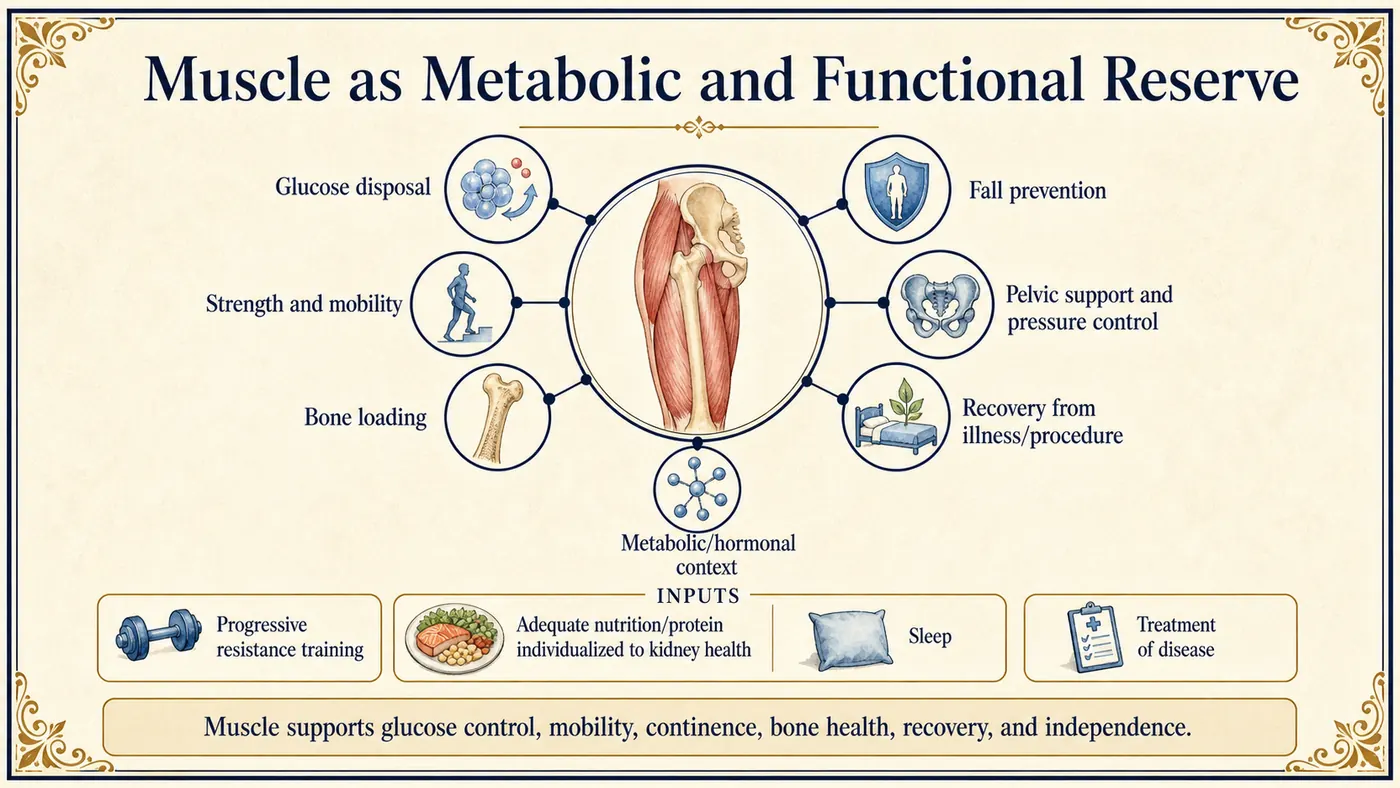
Muscle stores functional capacity. It helps clear glucose from the blood, supports bones and joints, protects mobility and provides reserve during illness and recovery. Loss of strength can worsen glucose handling, balance, recovery, sexual confidence and independence.
Sarcopenia is a muscle disorder in which low strength is an important warning sign. Low muscle quantity or quality helps confirm it, and poor physical performance indicates greater severity. It can progress quietly until getting out of a chair, carrying a bag or recovering after surgery becomes difficult. Weight alone can hide it: you may maintain or even gain weight while losing muscle and accumulating fat.
Why muscle matters in urology
In urology, muscle determines more than frailty.
- Mobility affects continence. Reaching the toilet in time depends on strength and balance.
- Strength affects safety at night. Getting in and out of bed and to the bathroom safely requires reserve.
- Metabolic muscle function influences diabetes and vascular disease, which in turn affect kidney and sexual health.
- Reserve affects recovery from cancer treatment, infection, urinary retention and surgery.
Strength reveals what mass can hide
Body-composition measurements can be useful, but they do not replace function. Two people with similar muscle mass may have very different strength, balance and power. Simple observations, such as rising from a chair without using your arms, walking at a confident pace, climbing stairs and carrying a load, often reveal reserve more directly than an isolated scan. Whether a person can rise from a chair, walk with confidence and recover from stress often predicts health more meaningfully than a single body-composition number.
Change over time matters. A rapid decline after an illness, a hospital stay, androgen-deprivation therapy for prostate cancer, prolonged inactivity or major surgery deserves attention even if your weight is stable. The earlier the loss is recognized, the more opportunity there is to rebuild before disability becomes self-reinforcing.
Resistance training comes first
Resistance training is the primary stimulus for maintaining strength. Sleep, total calories, vitamin status, neurologic disease, inflammation, medications and hormone deficiency can all affect how well your muscles adapt to training. If strength or physical reserve is declining, the question is why: sleep, nutrition, illness, medication, hormones and activity each deserve a look.
Protein advice requires a clinical context
Muscle needs an adequate nutritional environment, but “more protein” is not a universal prescription. Total energy intake, protein source and how it is spread through the day, kidney function, appetite, swallowing, digestive health and the actual training stimulus all matter. Protein supplements can be convenient, yet they may add sodium, sugar, herbal ingredients or contaminants, and they should be reviewed like other concentrated products.
If you have chronic kidney disease, the goal is not to choose between protecting the kidneys and preserving muscle. Nutrition and exercise should be coordinated so that unnecessary restriction does not accelerate frailty, and indiscriminate protein loading does not disregard kidney risk.
Where hormones fit
Testosterone may improve body composition in men who are truly deficient. But it is not a substitute for training, and it does not justify treating normal aging as a laboratory defect. Hormone treatment cannot replace resistance training, adequate protein, sleep, and treatment of the illness or medication that is driving the decline.
Illness spends the reserve built in advance
A urinary infection, cancer treatment, a blockage or a hospital stay can rapidly reduce activity and appetite. If you enter that event with stronger legs, better balance and greater metabolic reserve, you often have more options during recovery. This does not make frailty a personal failure, and it does not guarantee a complication-free course. It explains why building reserve before a crisis is part of preventive urology.
Measure, act and remeasure
Start by asking why strength or reserve is changing, rather than assuming it is simply age. Then build the foundation: progressive resistance training, adequate and appropriately tailored nutrition, consistent sleep, and control of the illnesses and medication effects that work against muscle. Choose measurements that can be repeated after you change something: chair rises, walking pace, stair climbing, grip or the resistance you use in training. Muscle strength and function matter more than appearance. Resistance training and adequate nutrition provide the foundation, with sleep and disease control also requiring attention. Hormones can influence muscle, but they cannot replace that work. The practical goal is a plan that can survive ordinary weeks, not one perfect day.
Questions to ask your urologist
- Why might my strength or physical reserve be declining?
- Could sleep, nutrition, an illness, a medication or a hormone problem be contributing?
- How much protein is appropriate for me, given my kidney function?
- Would testosterone be appropriate for me, or would it be treating normal aging?
- Which simple strength or function measures should we repeat to judge my progress?