Home › Conditions
49 guides
Urologic conditions, explained
Illustrated, plain-language explanations of the problems urologists treat most, adapted from A Urology Consult in a Book by David Shusterman, MD. Each guide covers what is happening in your body, the warning signs that need prompt care, and what to ask at your visit.
Prostate
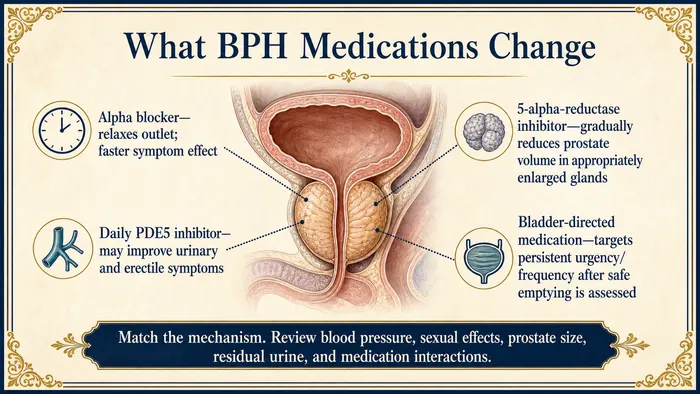 ProstateBPH medicationsThe best prostate medication is not the strongest pill but the one whose mechanism, timeline and side effects fit your prostate, bladder and priorities.Read guide →
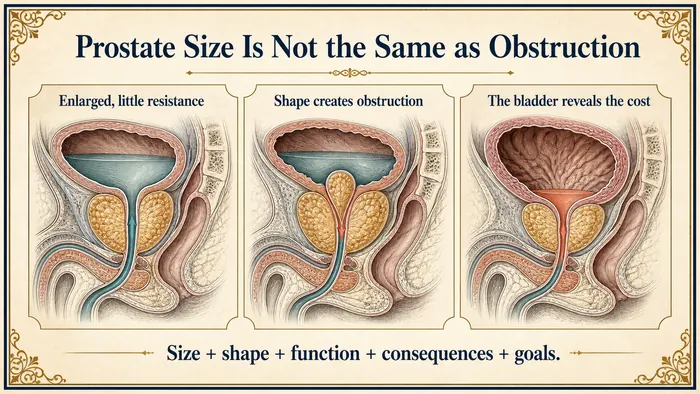 ProstateEnlarged prostate (BPH)Prostate size is anatomy; obstruction is physiology. Treatment, from watching to medication to procedures like PAE, should match both.Read guide →
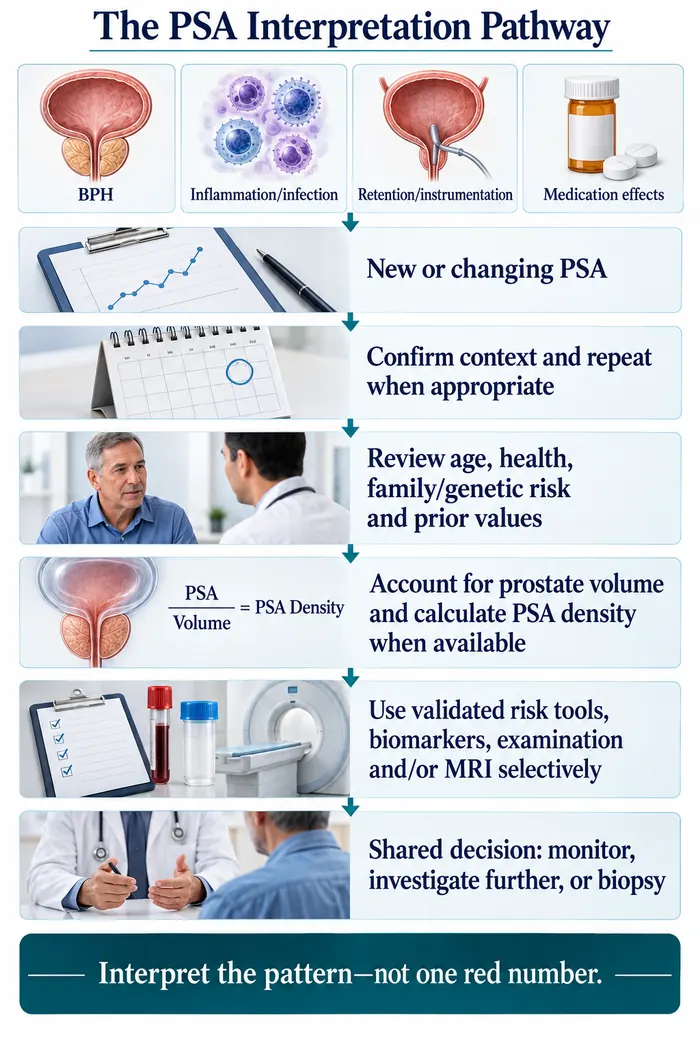 ProstatePSA & prostate cancerA high PSA starts a risk assessment, not a cancer verdict; MRI, biopsy and treatment choices should follow the biology.Read guide →
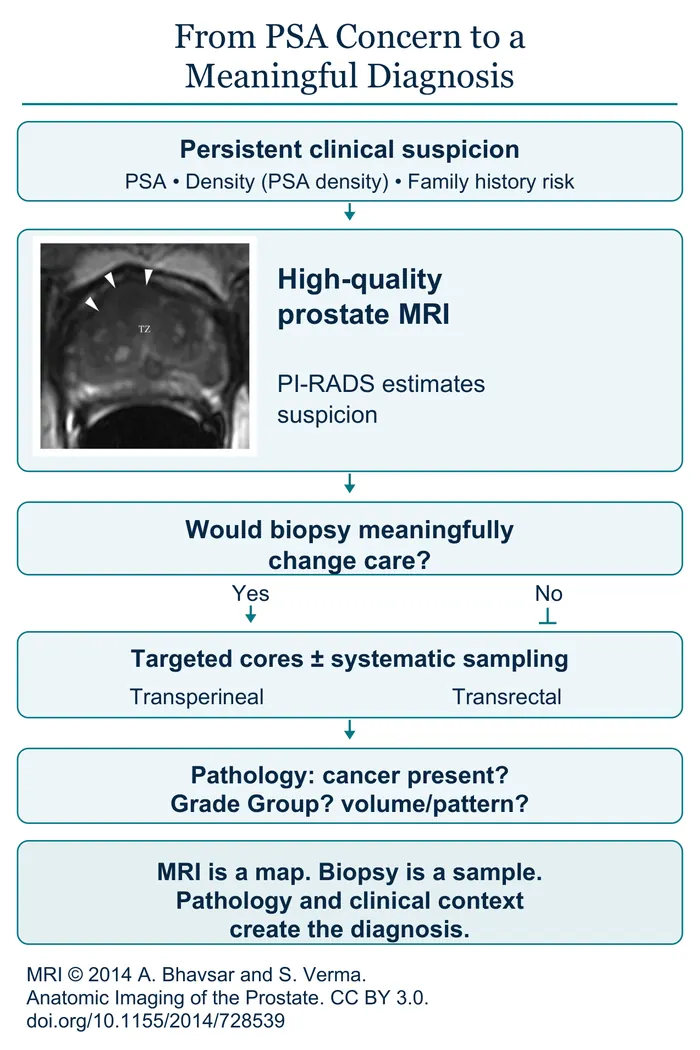 ProstateProstate MRI and biopsyMRI improves the map; biopsy establishes the tissue diagnosis. Neither should be interpreted alone, and the plan for each should be purposeful.Read guide →
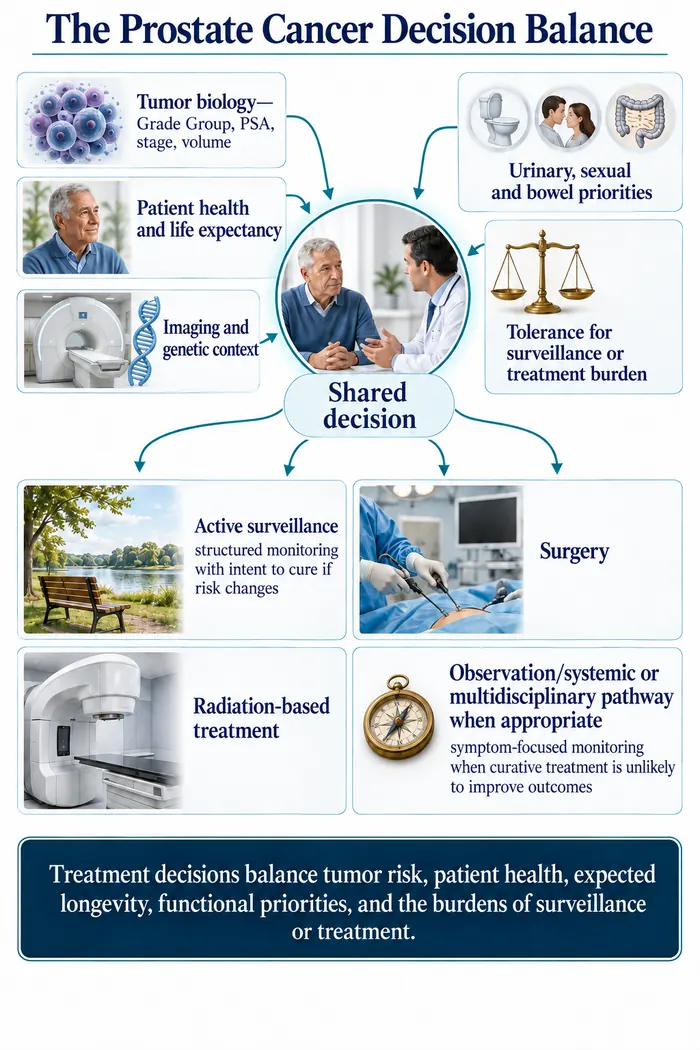 ProstateProstate cancer treatmentTreat the risk, not the word cancer. The right plan balances tumor biology, your health and life expectancy, and the urinary, sexual and bowel function you want to keep.Read guide →
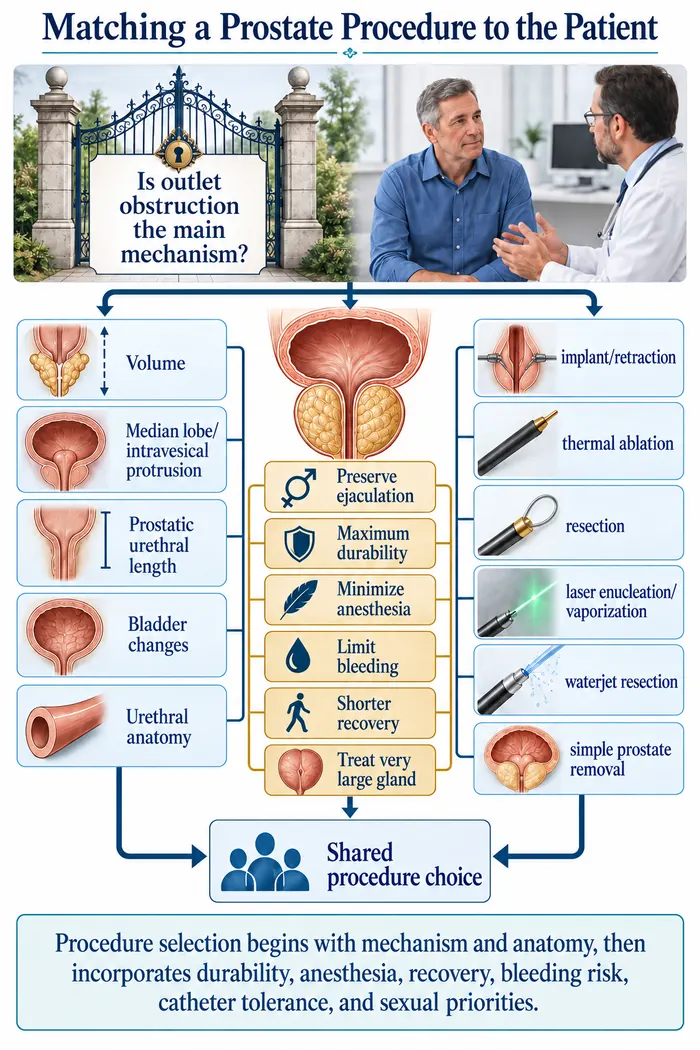 ProstateProstate proceduresProstate procedures are tools with different strengths, not a ranking from modern to old. The right one fits your anatomy and what you want to preserve.Read guide →
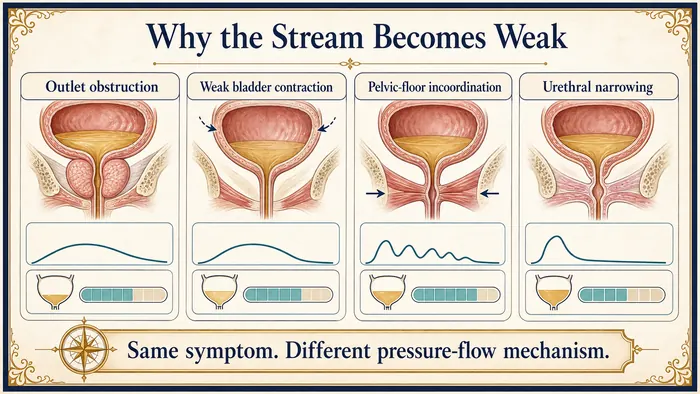 ProstateWeak urine streamA weak stream can come from the outlet, the bladder muscle, the pelvic floor or a narrowed urethra, and each needs a different fix.Read guide →
Bladder
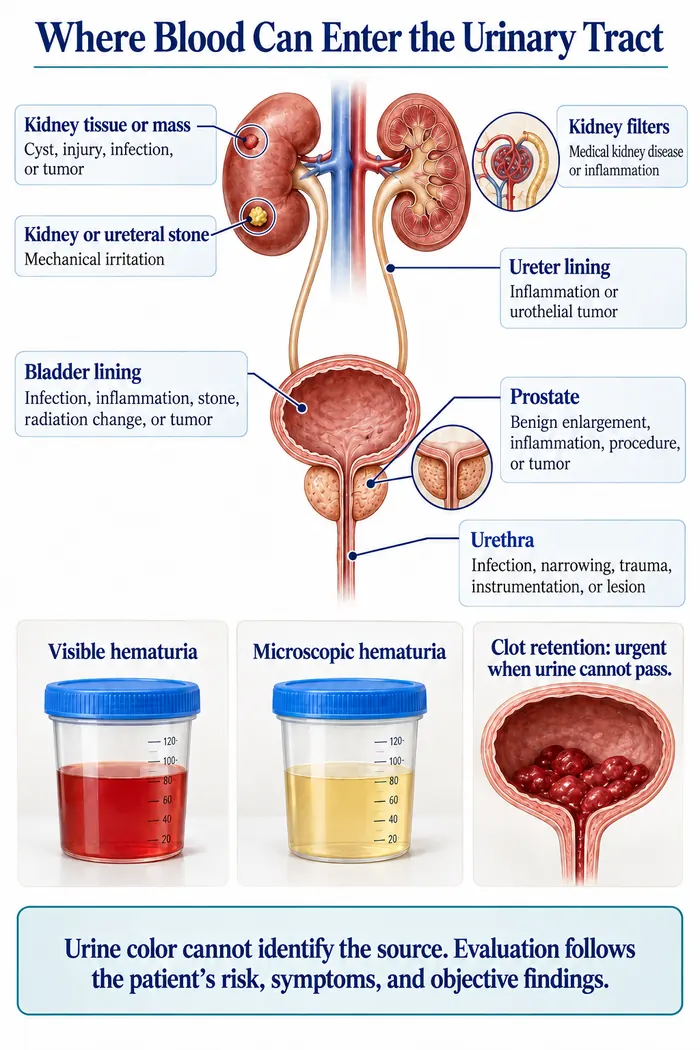 BladderBlood in urineBlood that appears once and disappears still deserves an explanation; most causes are not cancer, but painless bleeding should not be dismissed.Read guide →
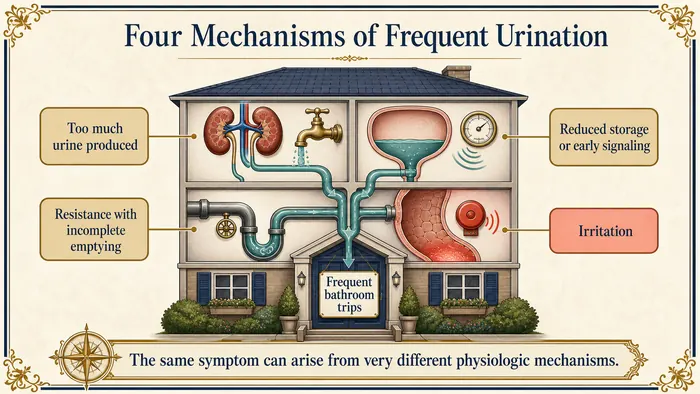 BladderFrequent urinationRepeated bathroom trips can come from too much urine, poor storage, incomplete emptying or irritation, and each needs a different plan.Read guide →
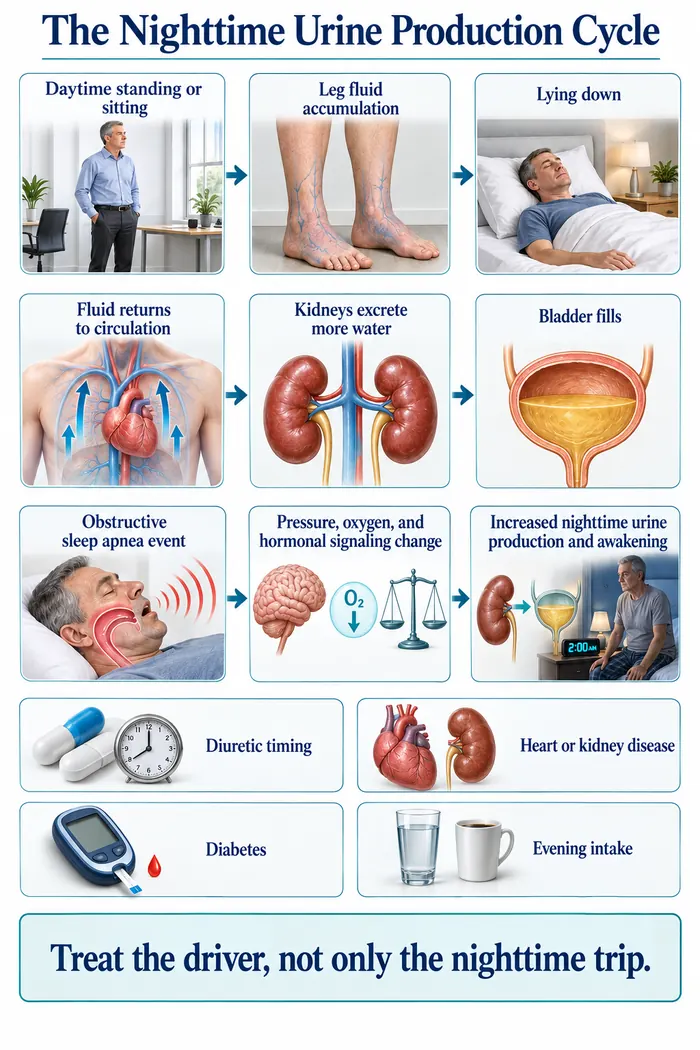 BladderNighttime urinationWaking to urinate can start in the kidneys, legs, sleep or metabolism, not just the bladder or prostate.Read guide →
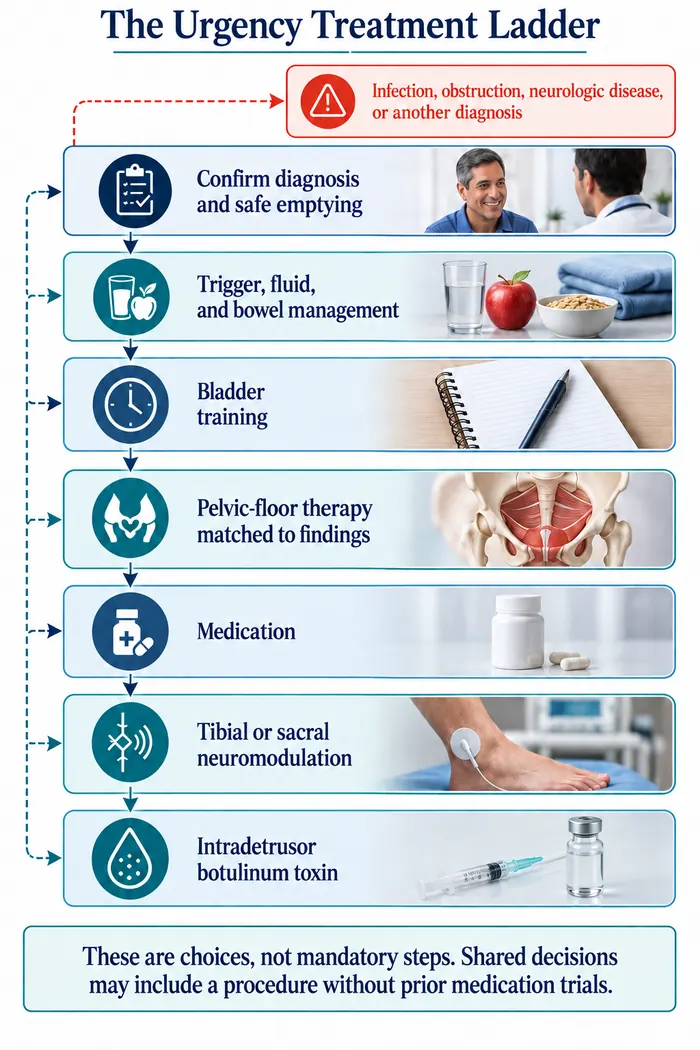 BladderOveractive bladderUrgency is an alarm that fires too early or too strongly; finding out why opens a wide ladder of treatment options.Read guide →
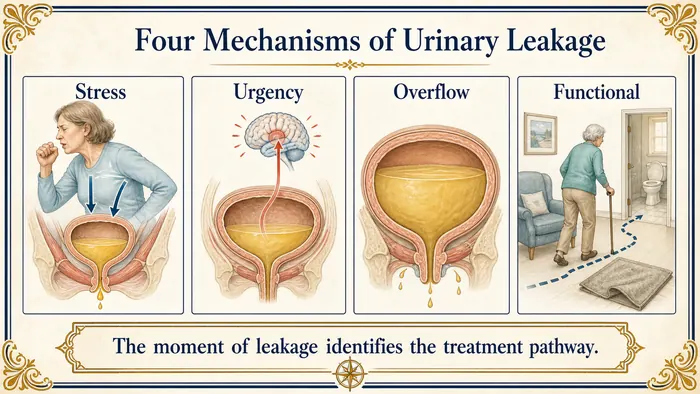 BladderUrinary leakageStress, urgency, overflow and functional leakage look the same on a pad but need different treatment plans.Read guide →
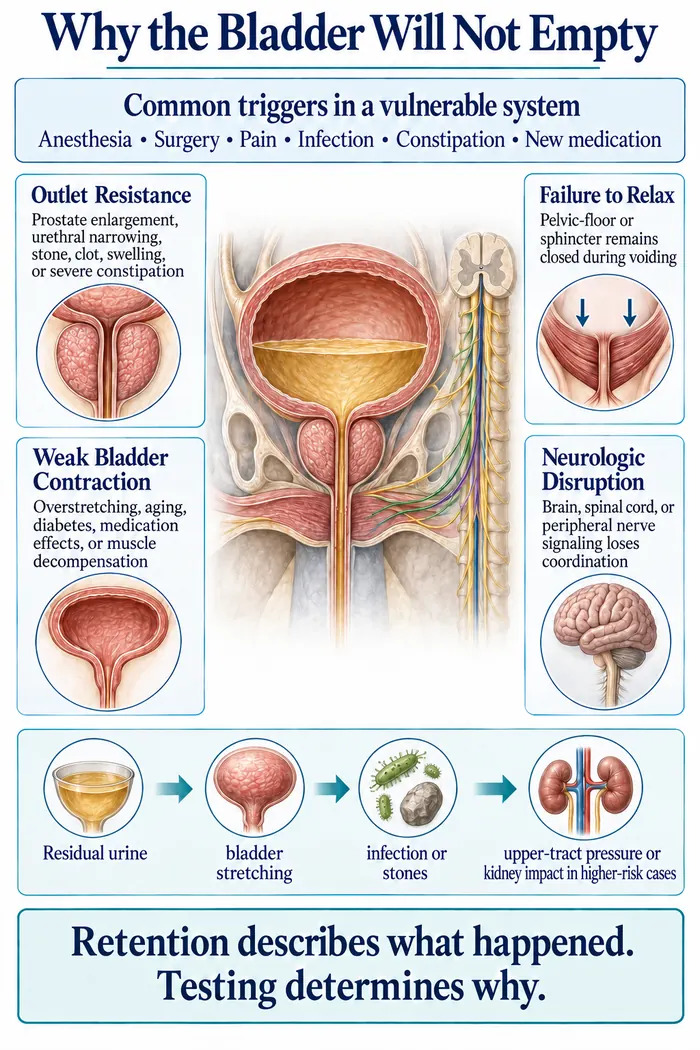 BladderUrinary retentionRetention tells you the bladder did not empty, not why. Drainage comes first; then the cause, whether outlet, bladder muscle, pelvic floor or nerves, has to be found.Read guide →
Kidney
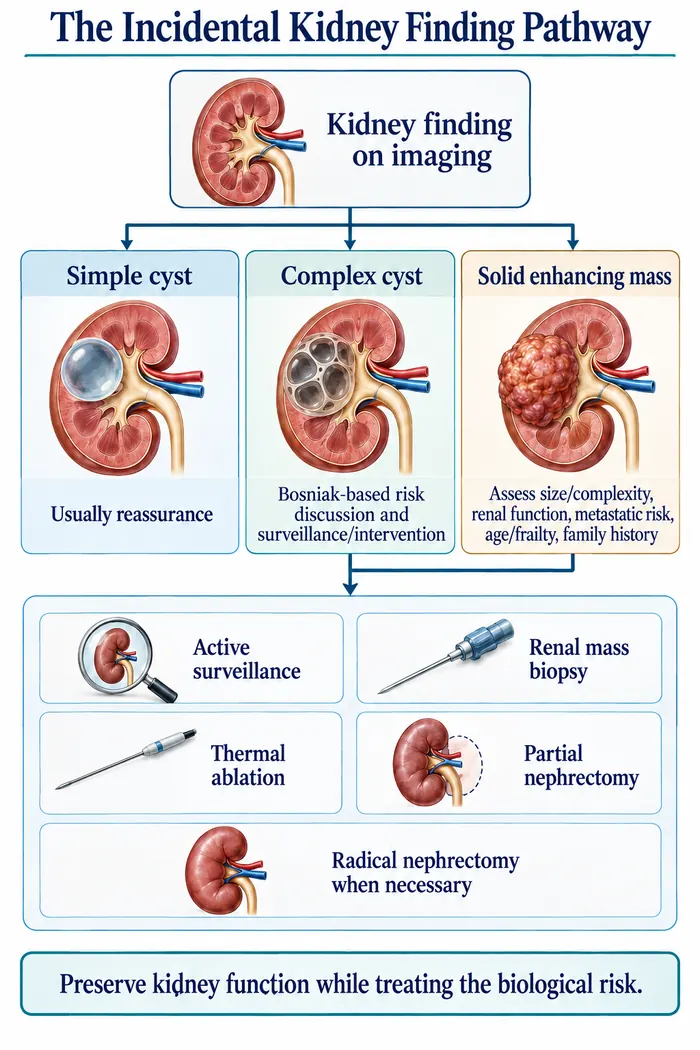 KidneyKidney cysts and massesThe word mass describes something visible, not whether it is benign, aggressive or in need of treatment. Classification, kidney function and your health guide the plan.Read guide →
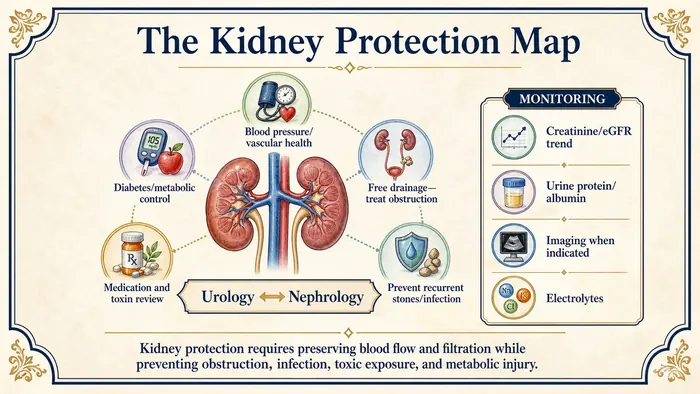 KidneyKidney healthKidney reserve is quiet until it isn’t; protecting it depends on tracking trends, keeping urine draining and reviewing medicines.Read guide →
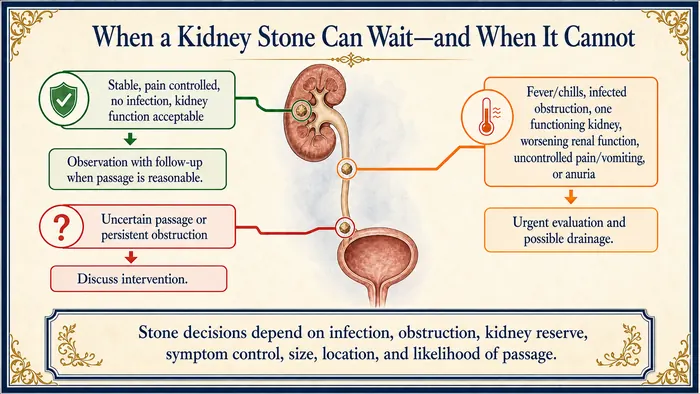 KidneyKidney stonesA stone becomes urgent when it threatens drainage, infection control or the kidney, and prevention works best when it targets your own urine chemistry.Read guide →
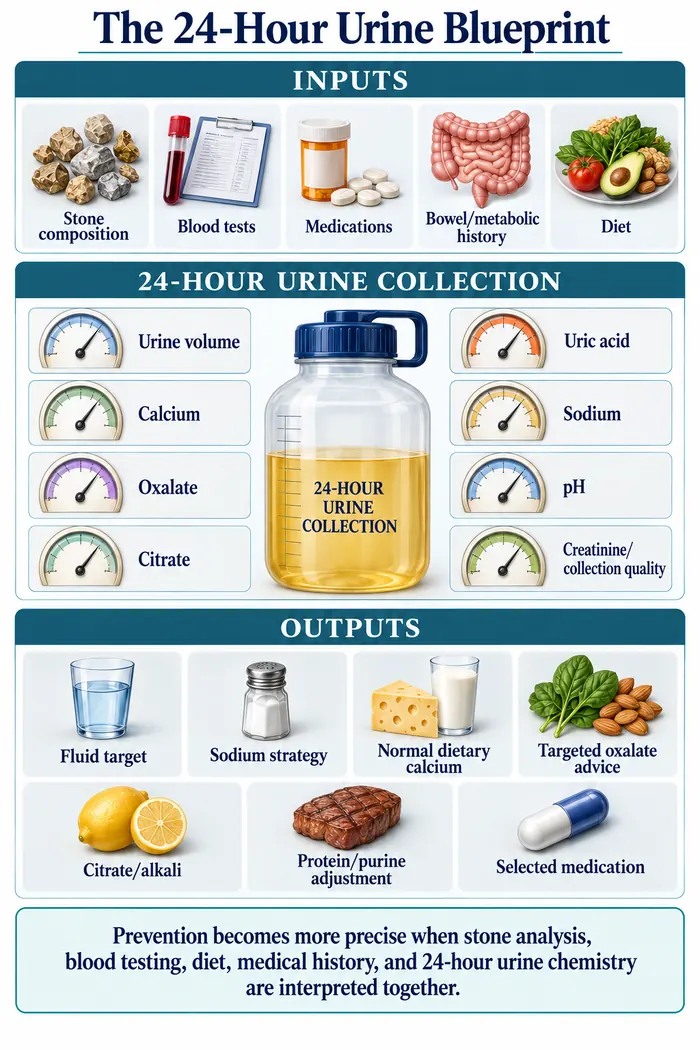 KidneyPreventing kidney stonesA stone is a crystallized metabolic history. Measuring your own urine chemistry turns generic advice into a targeted plan, then checks whether it worked.Read guide →
Infection & pain
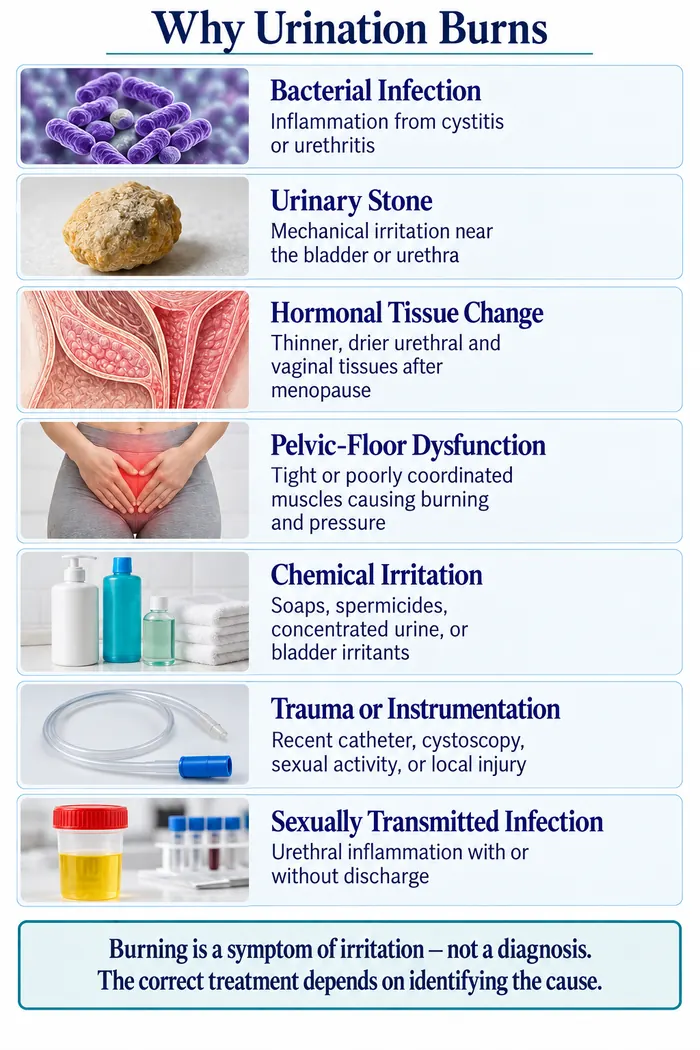 Infection & painPainful urinationBurning is a symptom of irritated tissue; infection is common, but stones, tissue change and pelvic-floor tension can feel the same.Read guide →
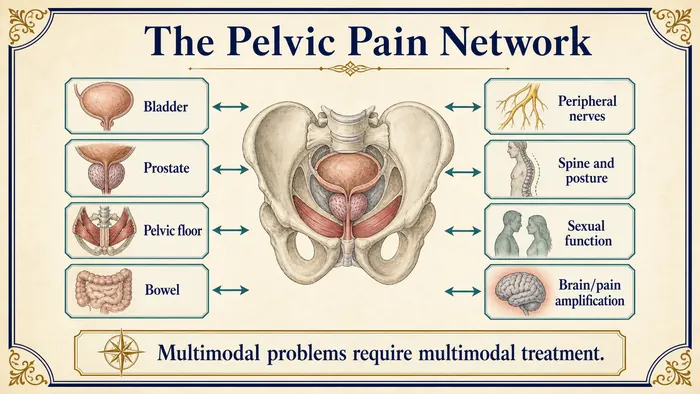 Infection & painPelvic pain & prostatitisPersistent pelvic pain is usually a network problem; finding the dominant drivers works better than another round of antibiotics.Read guide →
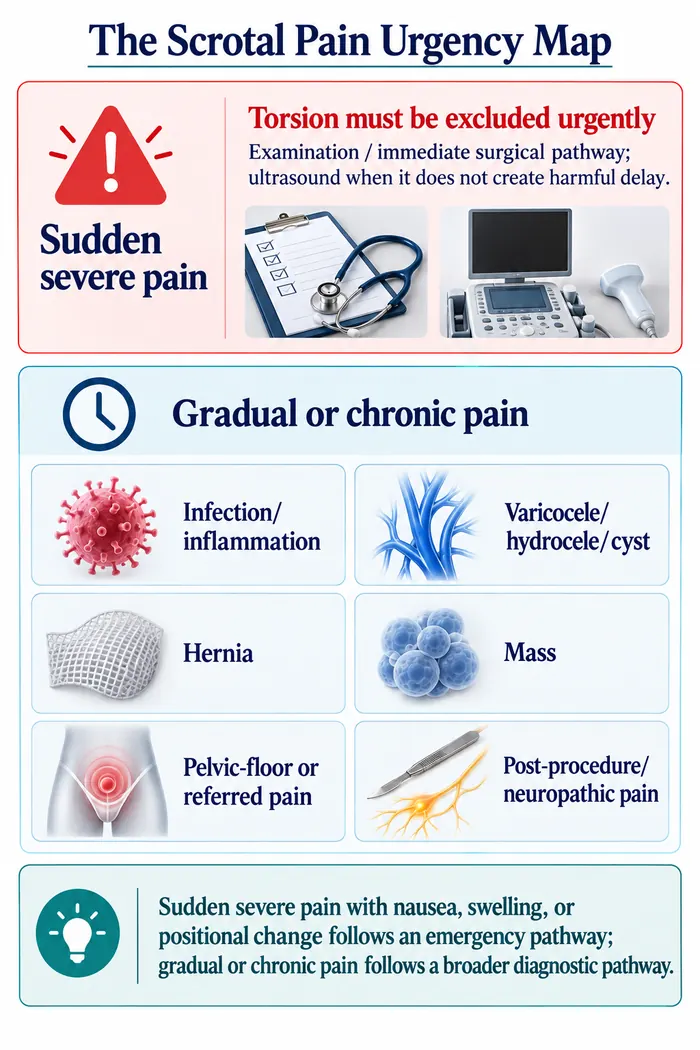 Infection & painTesticular painSudden severe pain demands speed; chronic scrotal pain demands a careful map, because the source is not always the testicle.Read guide →
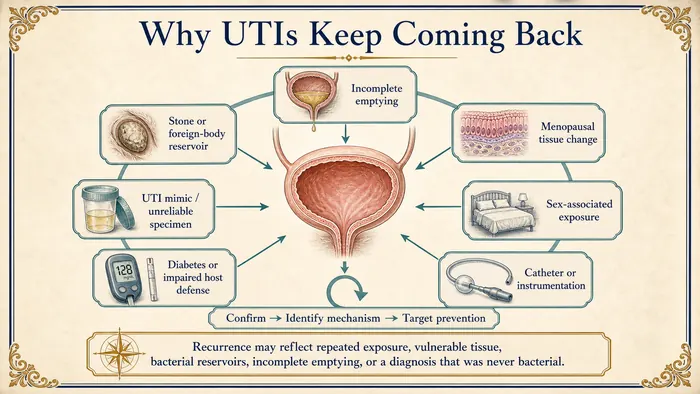 Infection & painUTI & recurrent UTIWhen infections keep returning, the question shifts from which antibiotic to why the urinary tract keeps giving bacteria an opening.Read guide →
Sexual health
 Sexual healthED as a health signalAn erection is a vascular event with a personal meaning. A change can be a quality-of-life problem and an early clue to broader health at the same time.Read guide →
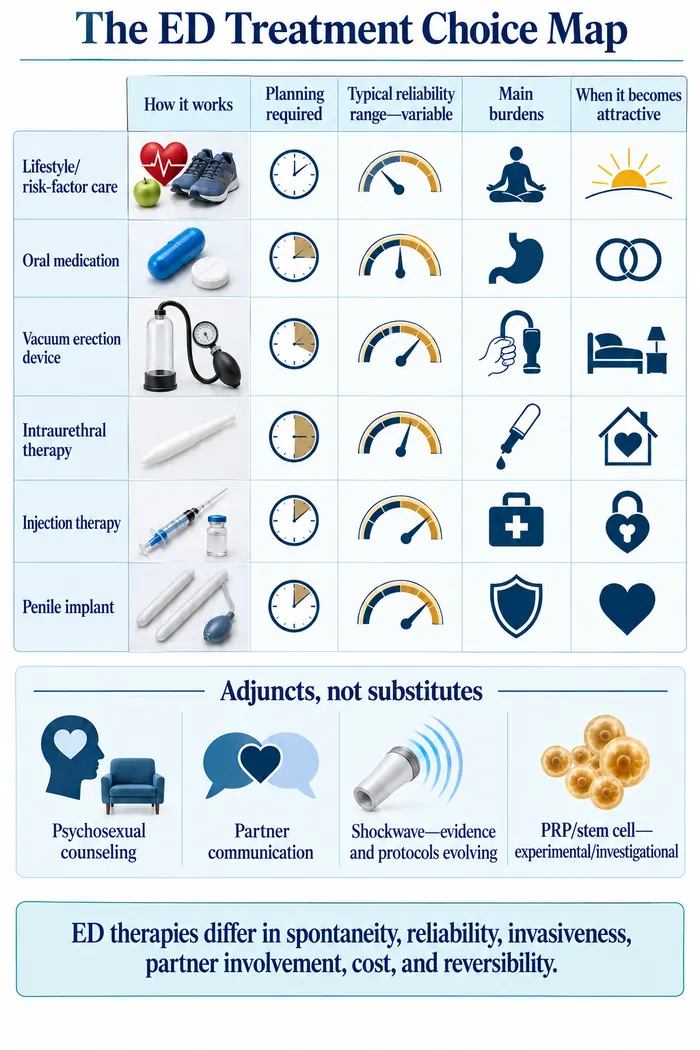 Sexual healthErectile dysfunctionErection problems are a legitimate quality-of-life concern and sometimes an early health signal; treatment options range from pills to implants.Read guide →
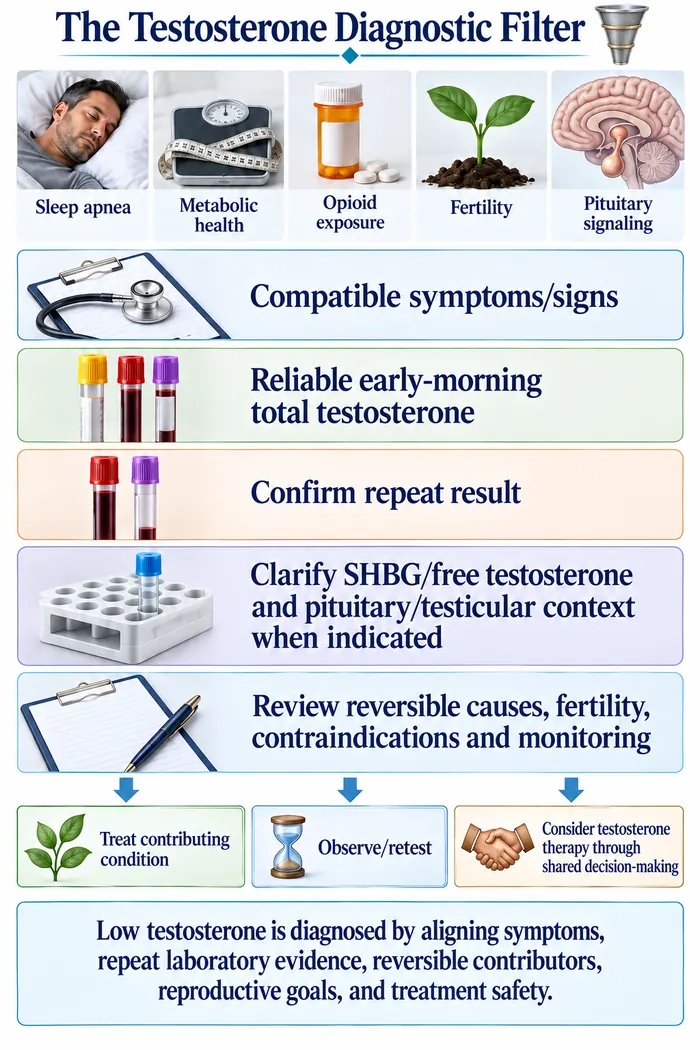 Sexual healthLow testosteroneLow testosterone is a diagnosis built from symptoms plus repeated morning tests, not a single number or a list from an advertisement.Read guide →
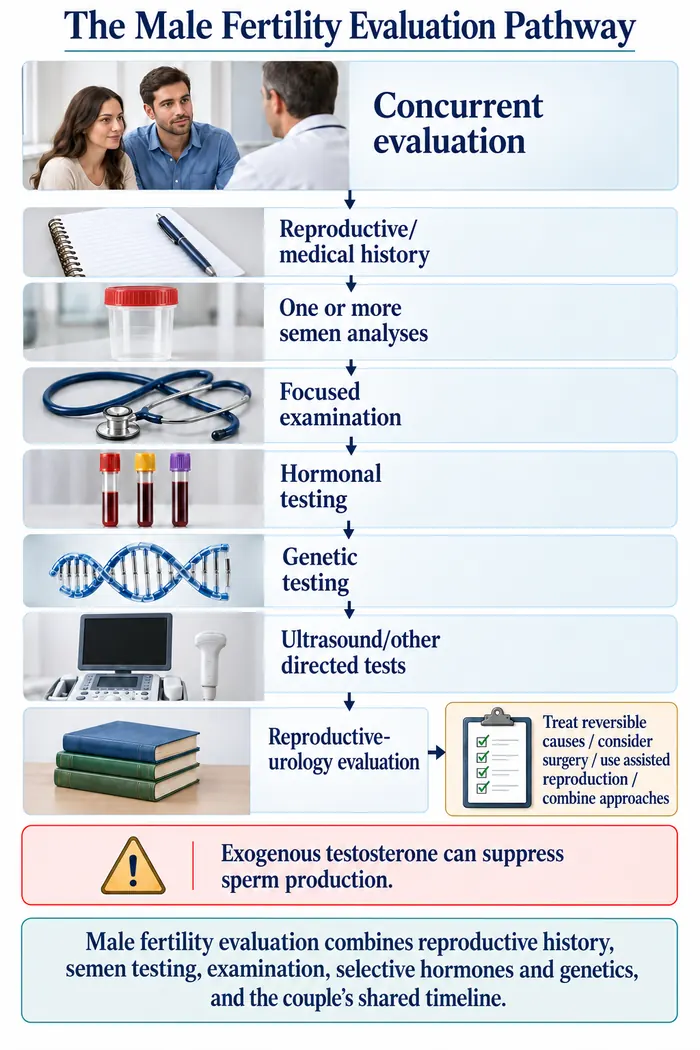 Sexual healthMale fertilityFertility can be impaired even when erections, desire and outward health seem normal. Both partners should be assessed together, on a shared timeline.Read guide →
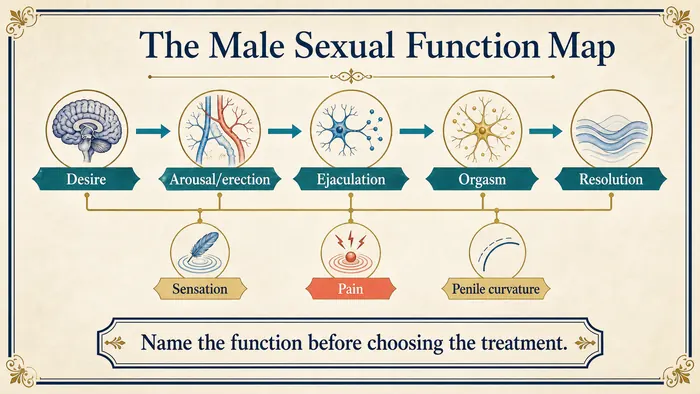 Sexual healthNaming the sexual changeThe first therapeutic act is naming the correct function. A precise description of what changed points to the cause and to the goal worth protecting.Read guide →
Women's health
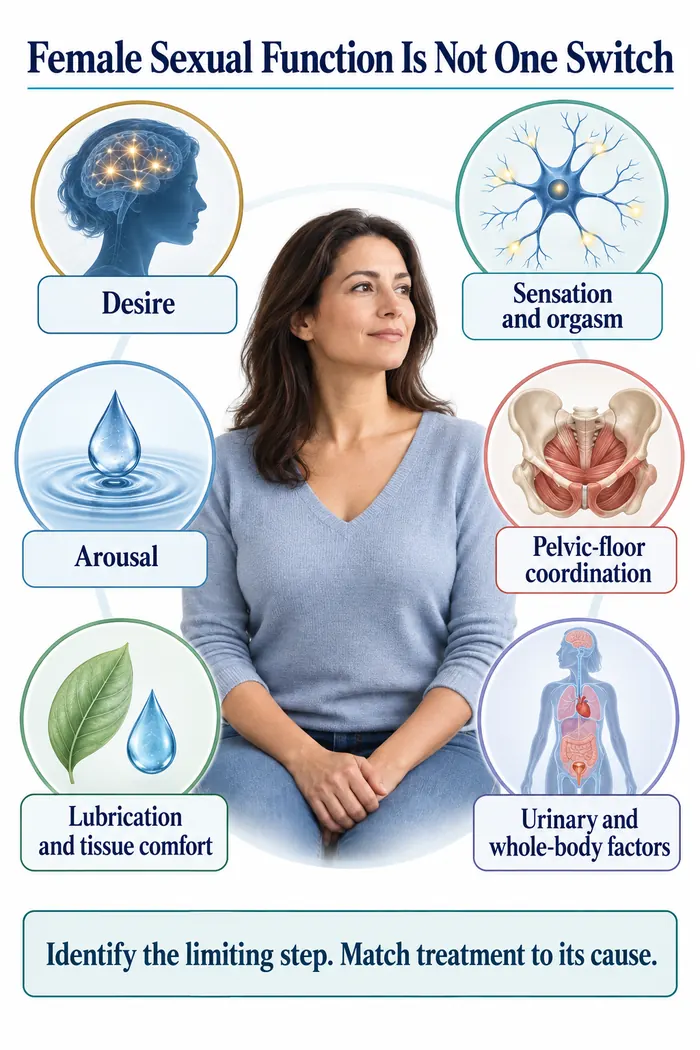 Women's healthFemale sexual functionDesire, arousal, lubrication, comfort, orgasm and pelvic-floor coordination can change for different reasons. Identify the limiting step, then match treatment to it.Read guide →
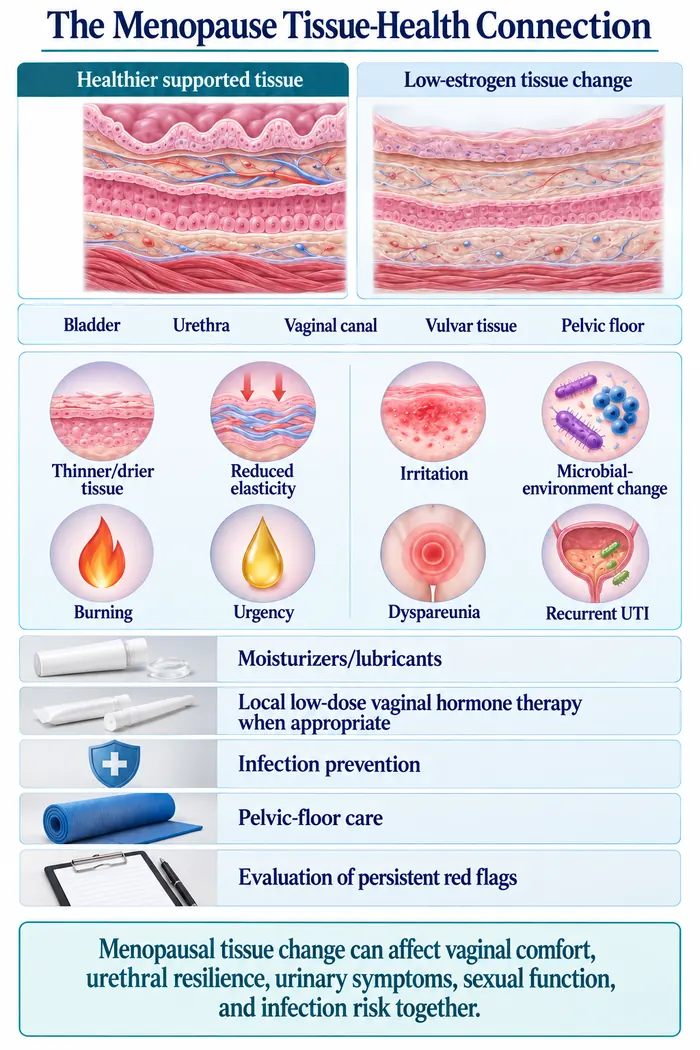 Women's healthMenopause and the bladderWhen tissue change mimics infection, the cycle of negative cultures and repeated antibiotics can be broken by treating tissue health directly.Read guide →
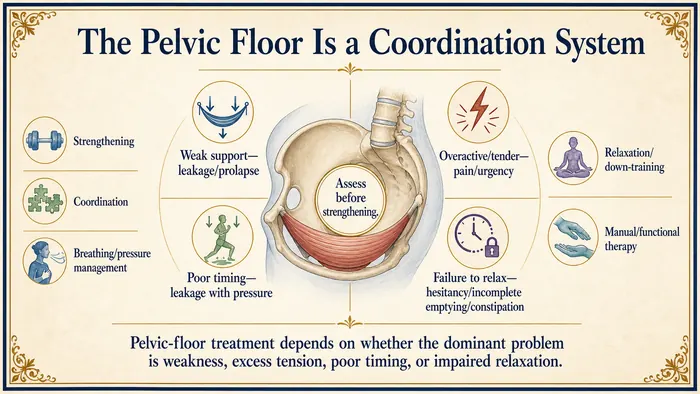 Women's healthPelvic floor problemsSome pelvic floors need strengthening; others need relaxation and coordination. An examination should decide which before you start exercises.Read guide →
 Women's healthWomen’s bladder healthCommon does not mean inevitable or untreatable. Female bladder symptoms reflect tissue health, childbirth, pelvic support, hormones, bowel function, mobility and life stage.Read guide →
Healthy living
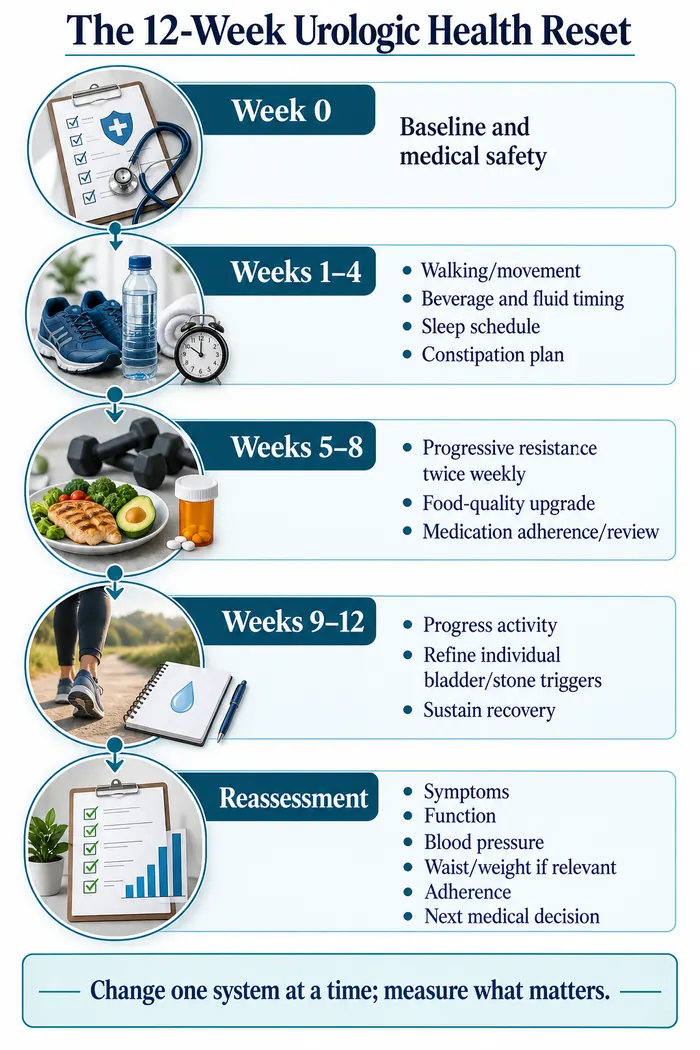 Healthy living12-week health resetA reset should make healthier habits easier to continue, not demand twelve perfect weeks. Measure, change a few things, remeasure and keep what works.Read guide →
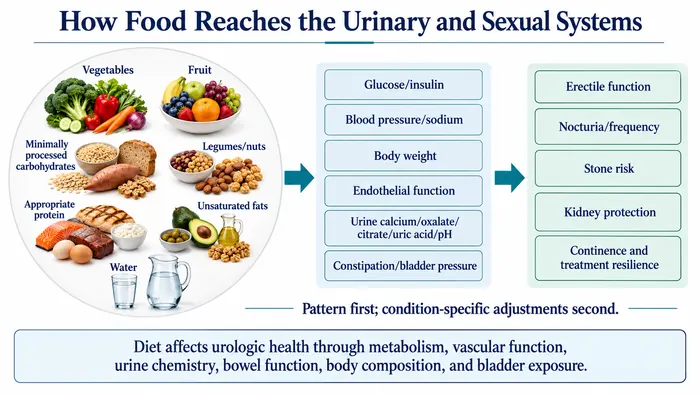 Healthy livingDiet and urologic healthFood is not a universal cure, but it changes the environment in which urologic disease develops. Start with a sustainable pattern, then adjust for your diagnosis.Read guide →
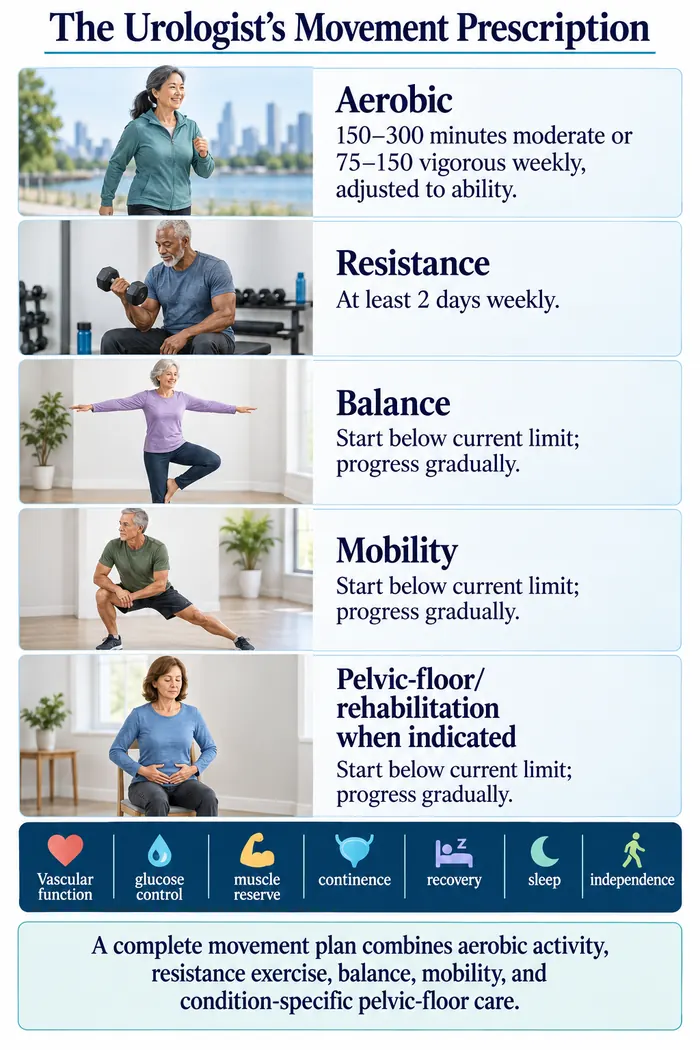 Healthy livingExercise and urologyMovement treats more than weight. The right starting dose is the one you can perform safely and repeat, adjusted for leakage, pain, surgery or frailty.Read guide →
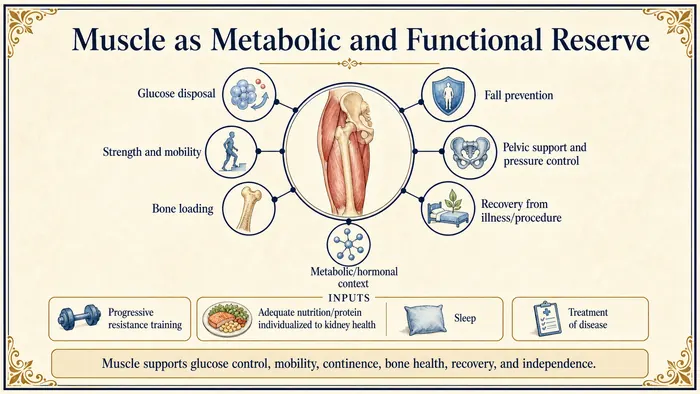 Healthy livingMuscle and metabolismLoss of strength can quietly worsen glucose handling, balance, recovery and independence. Hormones cannot replace resistance training, nutrition, sleep and treating the cause.Read guide →
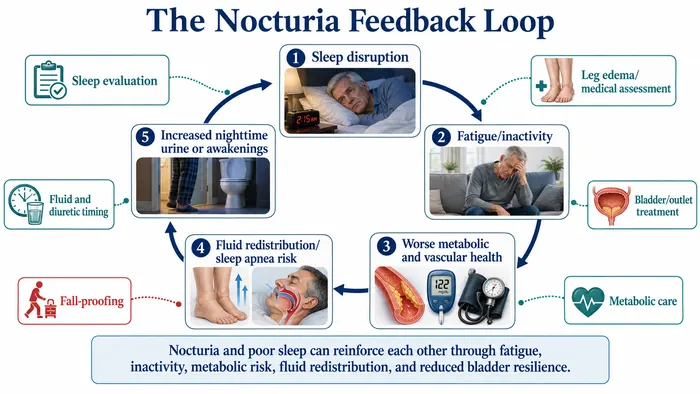 Healthy livingNocturia, sleep & healthNocturia belongs to the bladder, kidneys, circulation, sleep and daily schedule, and fragmented sleep is a real health burden in its own right.Read guide →
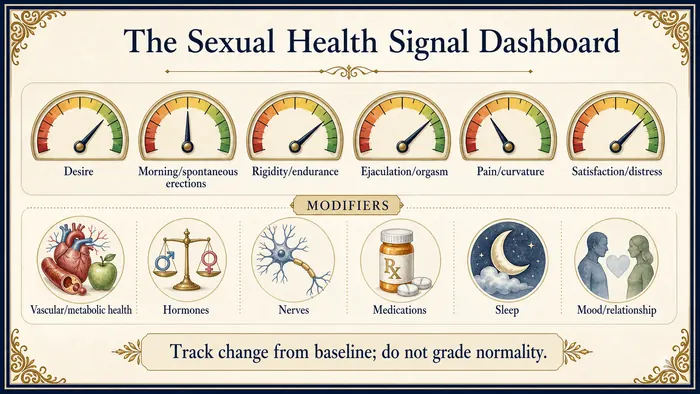 Healthy livingSexual function & healthSexual function is not a measure of worth, but a meaningful change from your own baseline can point to treatable health problems that silence would hide.Read guide →
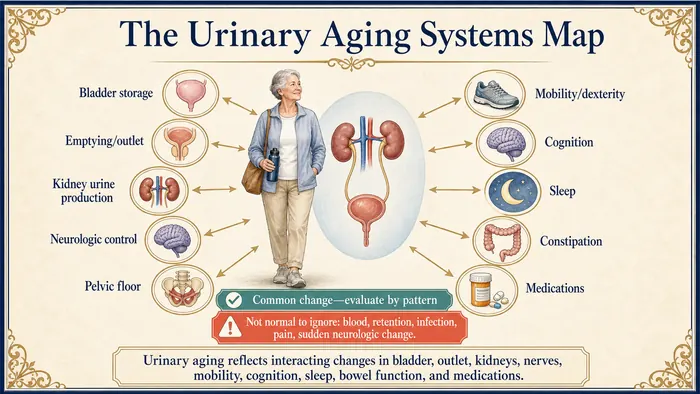 Healthy livingUrinary health and agingAging changes risk; it does not explain every symptom. Name the function that changed, then decide whether to reverse it, reduce risk, adapt or monitor.Read guide →
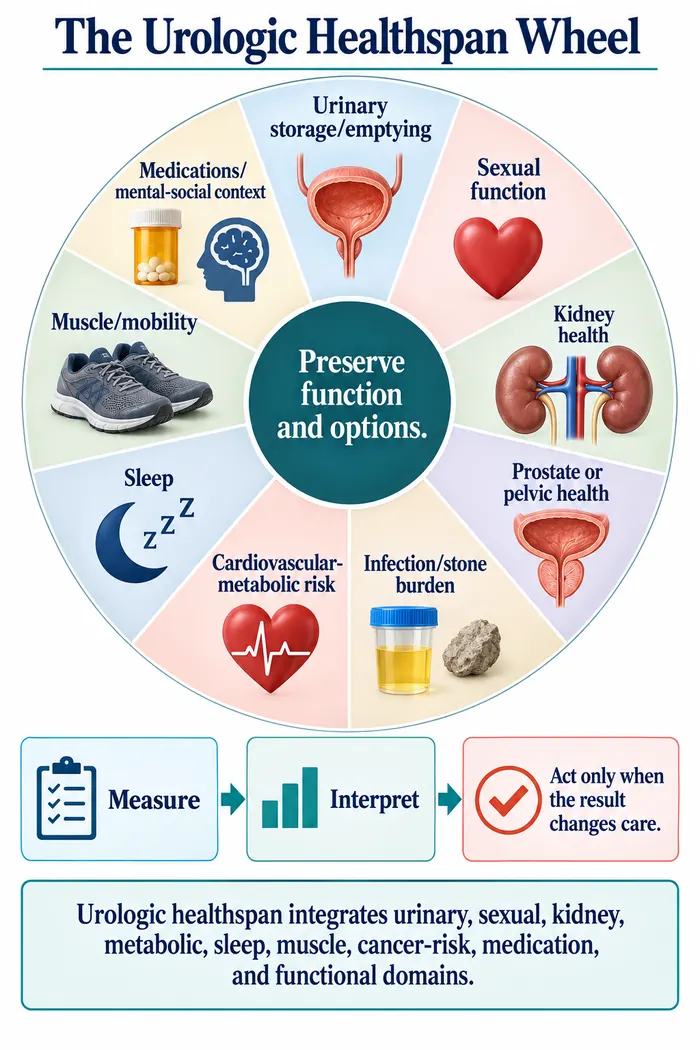 Healthy livingUrologic healthspan checkHealthspan care is not maximal testing. It is coordinated attention to the threats and functions most likely to shape your future.Read guide →
Tests & visits
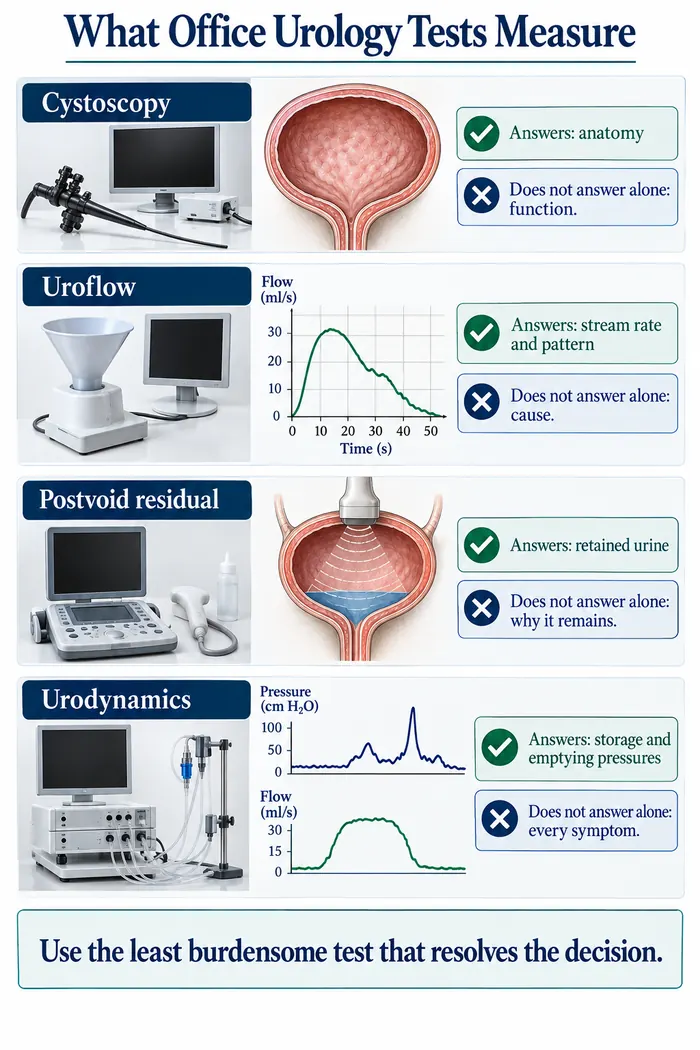 Tests & visitsCystoscopy and urodynamicsEach office test measures a different part of the system. The right one is the least burdensome test that can answer the question and change your treatment.Read guide →
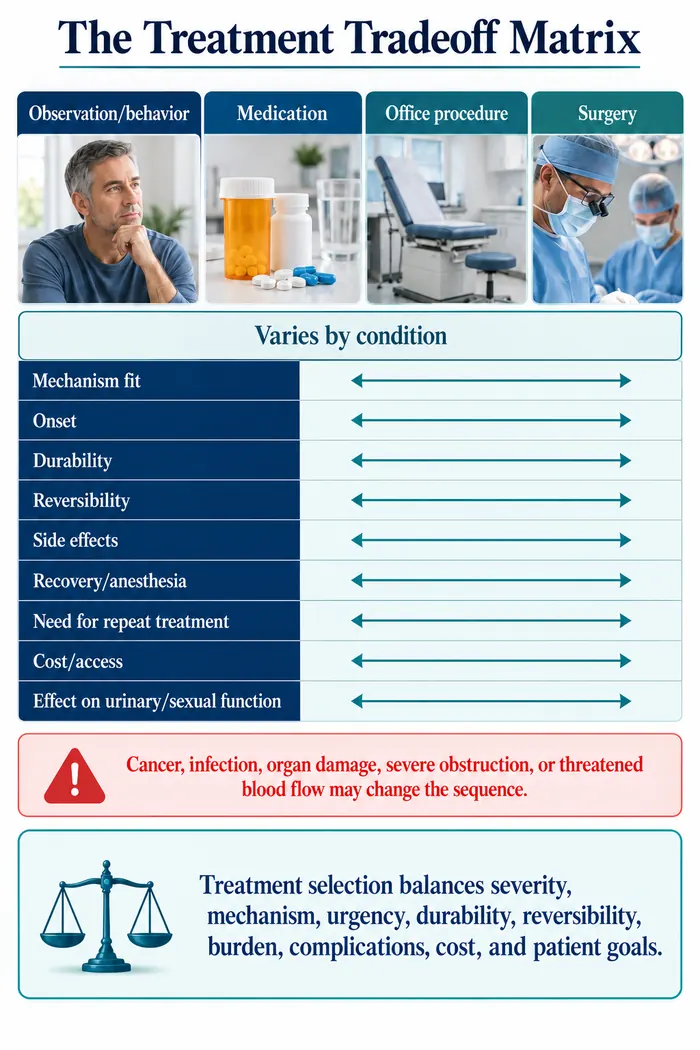 Tests & visitsMedication or procedure?Escalation is a tradeoff, not a failure. Name what success means first, then compare benefit, burden, durability and the fallback plan for each option.Read guide →
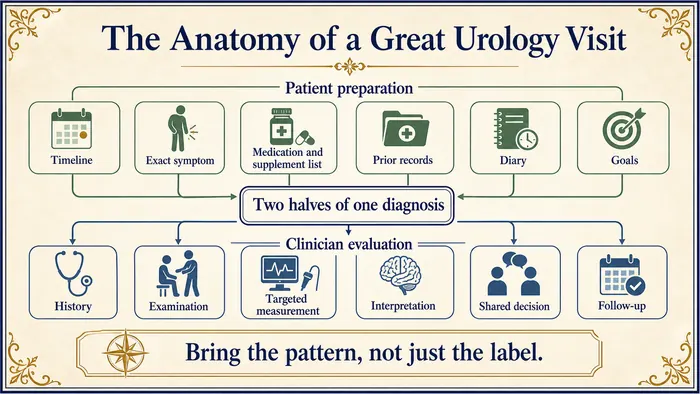 Tests & visitsPreparing for your visitThe most valuable thing you can bring to a urology visit is not another scan. It is an organized story: the main problem, a timeline, your medications and the records that matter.Read guide →
 Tests & visitsSecond opinionsAsk for a different lens, not just another yes. A useful second opinion reviews the original evidence and explains whether a genuinely different pathway exists.Read guide →
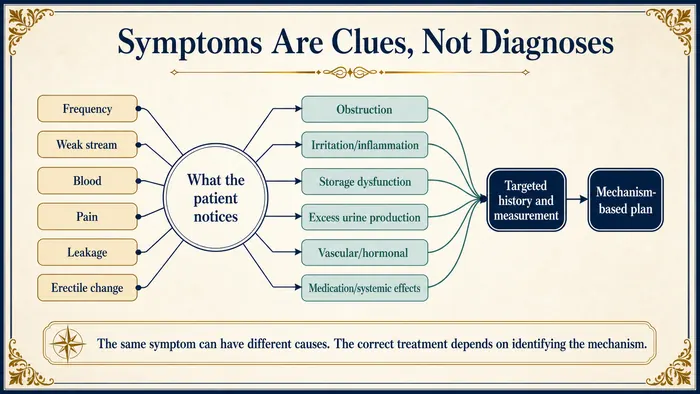 Tests & visitsSymptoms are cluesA symptom starts the investigation. Its timing, triggers and what changed alongside it point toward the mechanism, which may lie outside the urinary tract.Read guide →
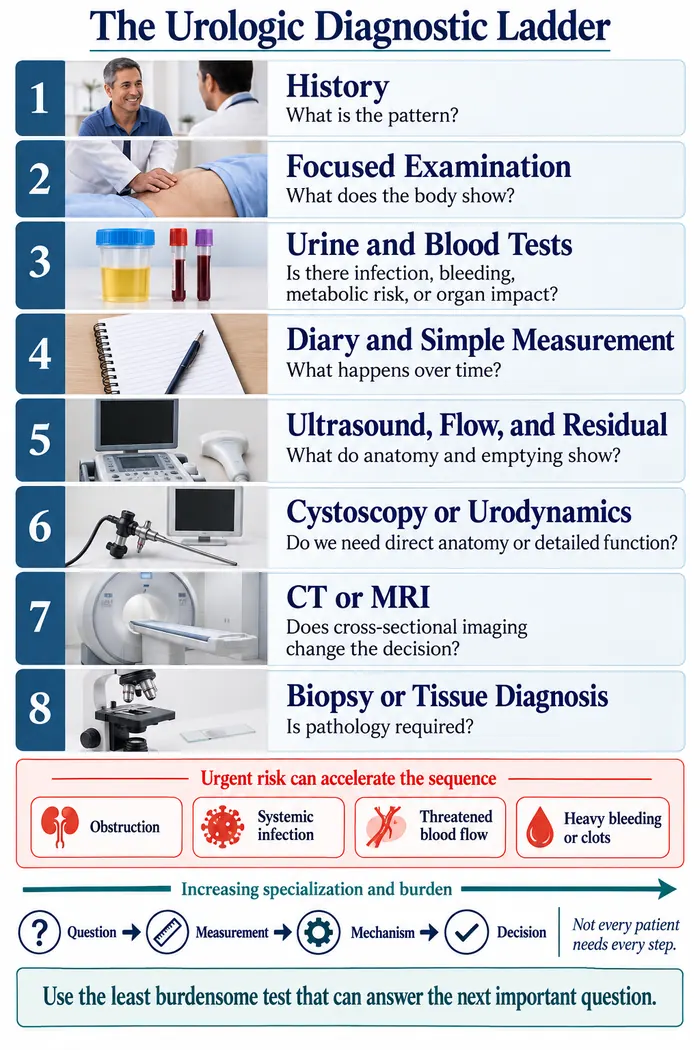 Tests & visitsThe diagnostic ladderGood diagnosis is the right information in the right order: use the least burdensome test that can answer the next important question.Read guide →
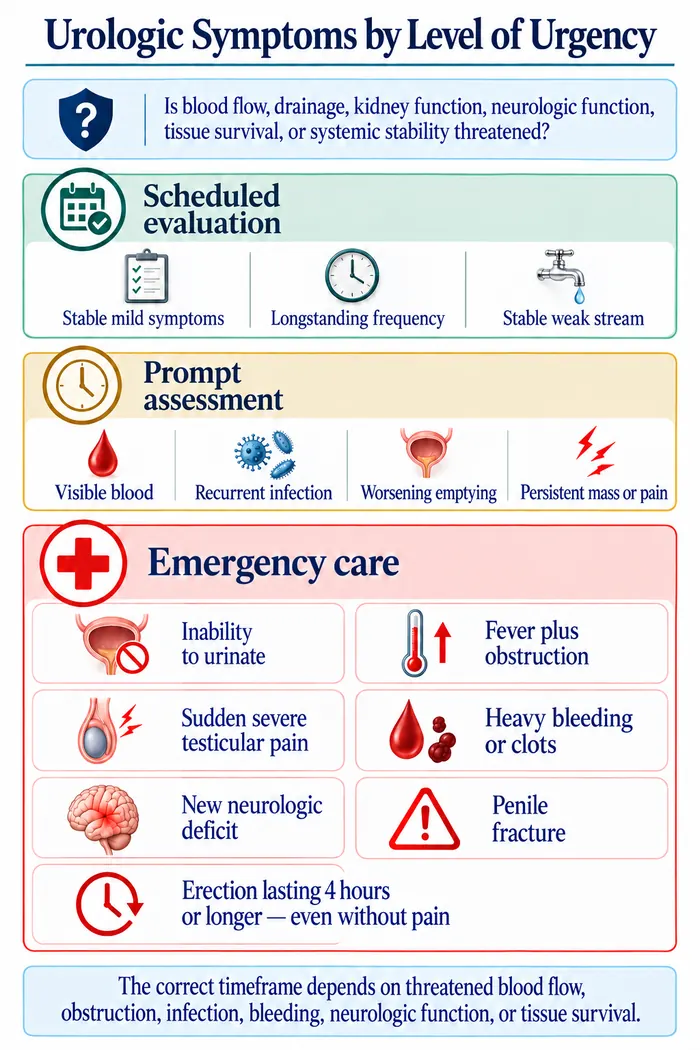 Tests & visitsUrgent urology symptomsUrgency depends on what could be lost by waiting, not on how bad a symptom feels. Know the few situations in which hours matter.Read guide →
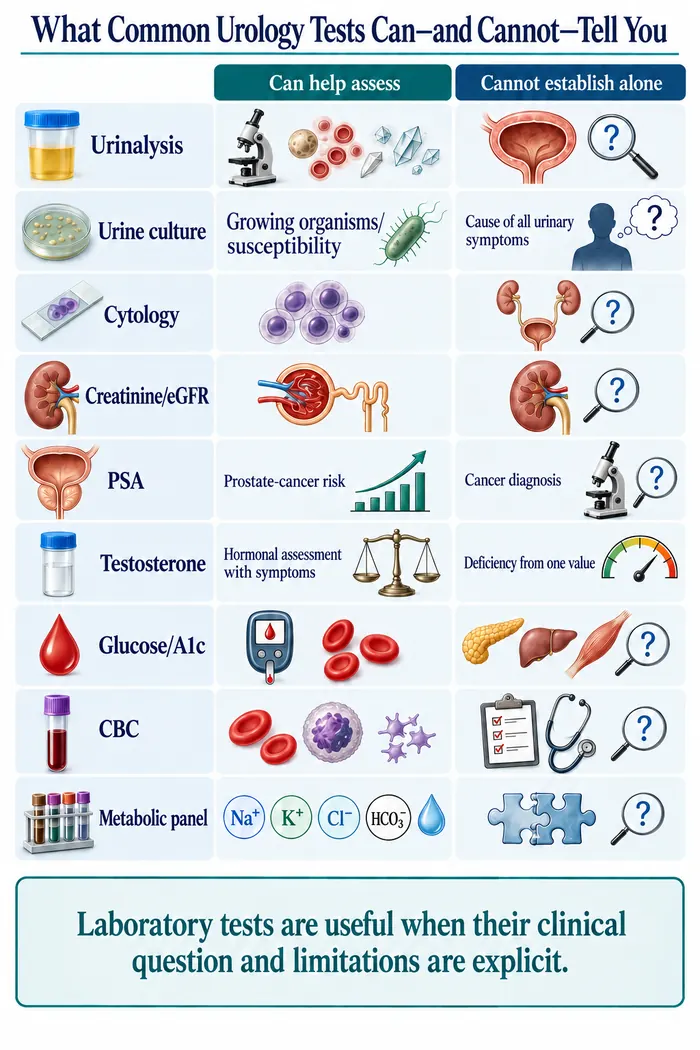 Tests & visitsUrine and blood testsA result answers only the question it was designed to answer. Abnormal does not always mean dangerous, and normal does not mean every system is healthy.Read guide →
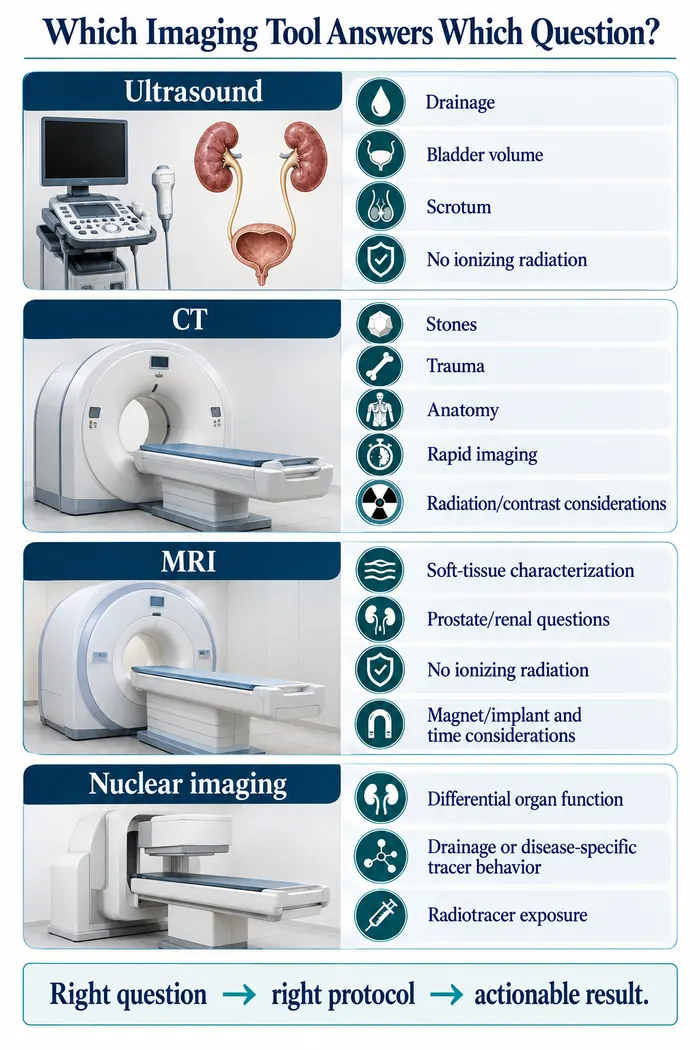 Tests & visitsUrology imagingChoose the test that can see the question. Imaging is not a ladder; each method answers a different question, and protocol is part of the prescription.Read guide →
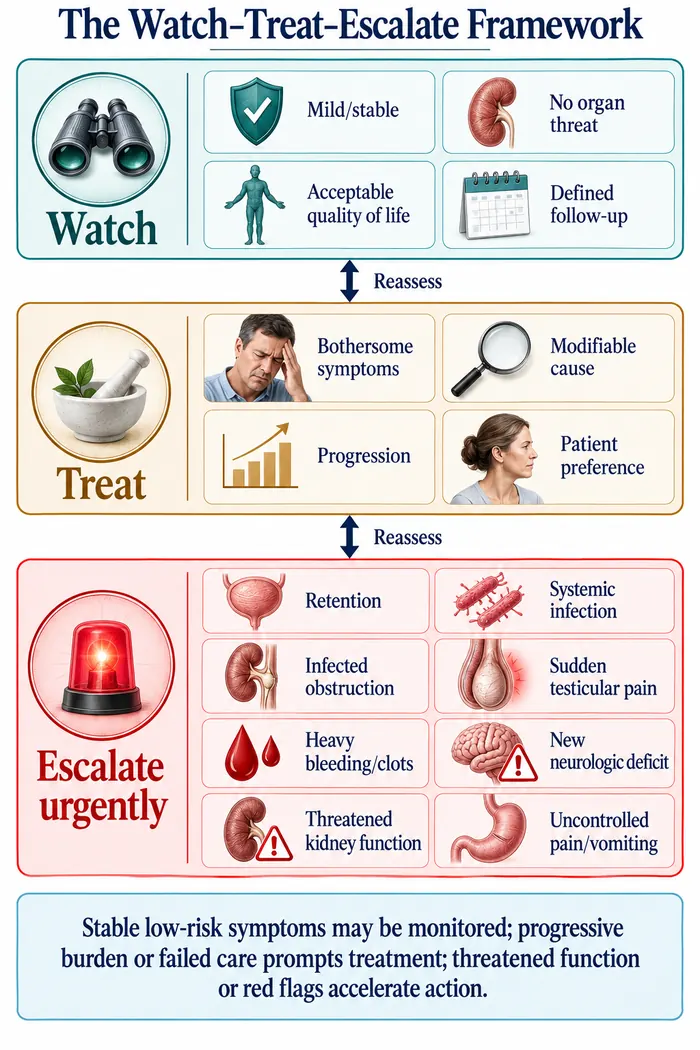 Tests & visitsWatch, treat or escalateWatching, treating and escalating are positions, not permanent labels. They change when symptoms, measurements, organ risk, burden or your priorities change.Read guide →
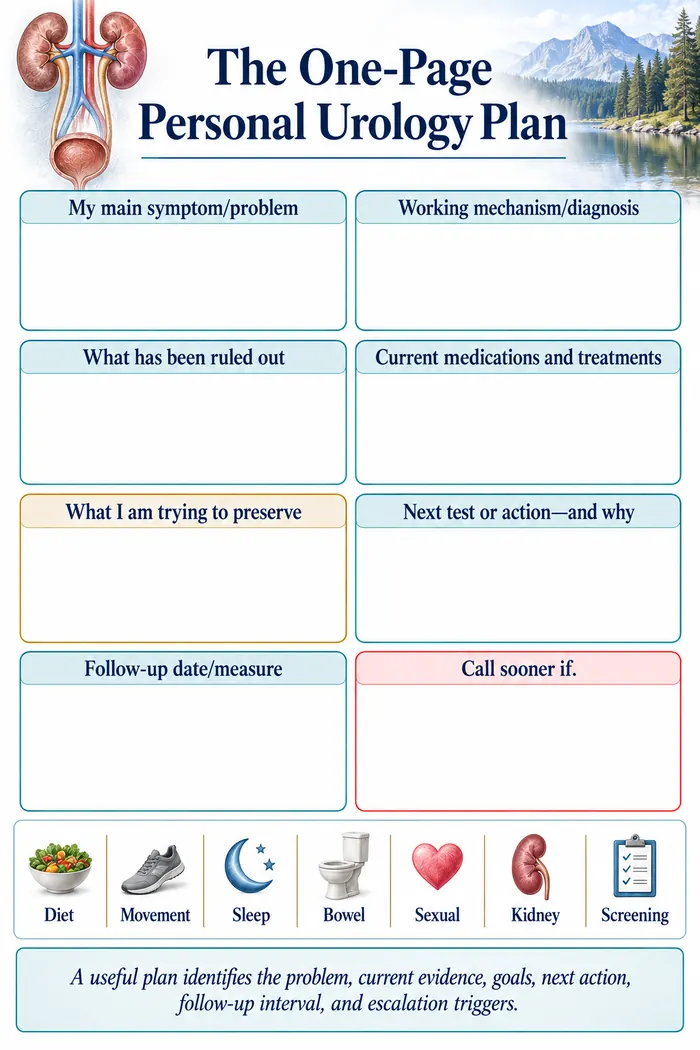 Tests & visitsYour urology planA useful plan fits on one page: the problem, the evidence, your goal, the next action, who owns it, when the loop closes and when to seek care sooner.Read guide →
No guide matches that. Try another word.