Key points
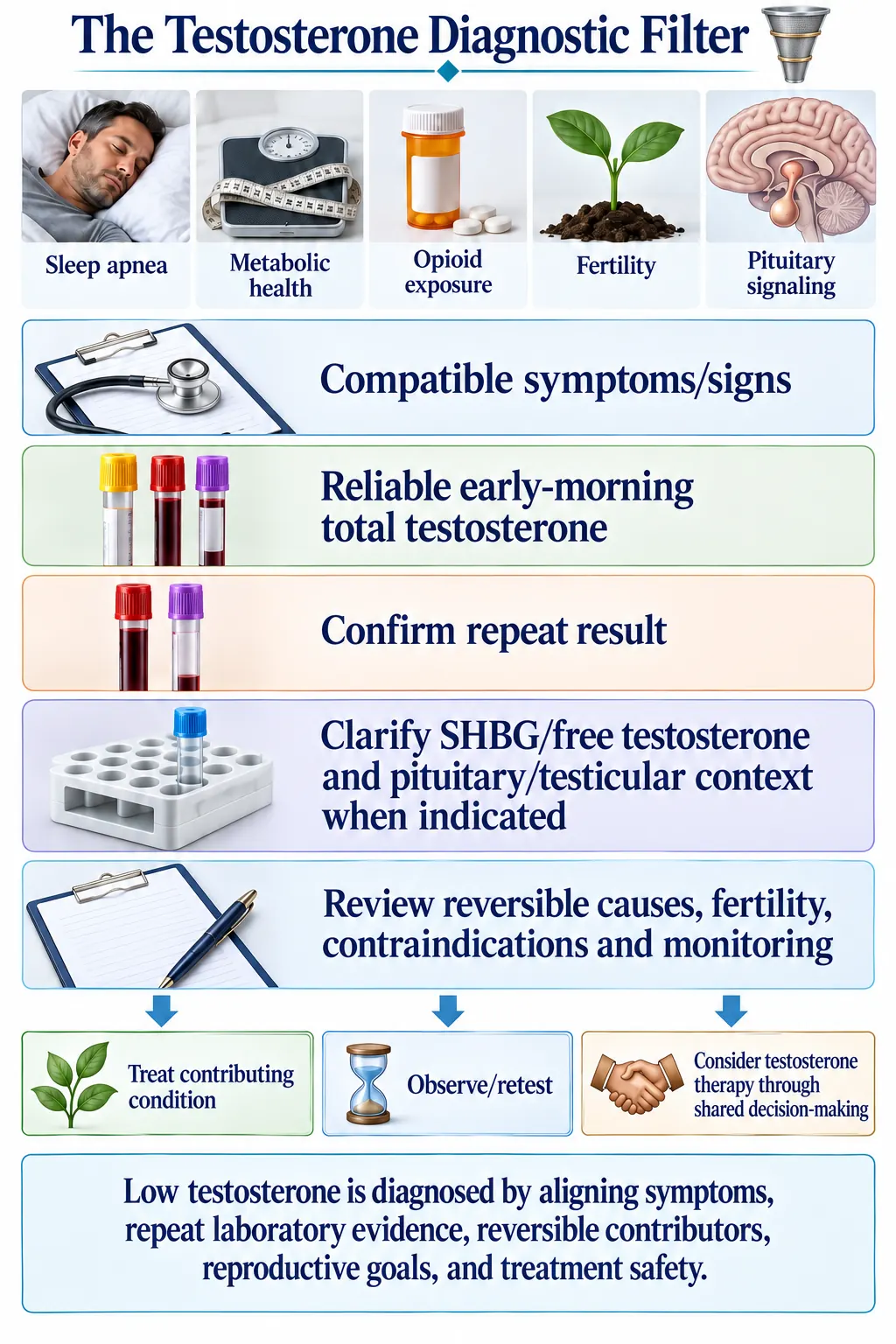
- Testosterone deficiency should not be diagnosed from fatigue alone or one poorly timed lab result.
- Total testosterone should be measured on two separate early mornings before diagnosis.
- Low libido is not the same as low testosterone; depression, relationship strain, sleep loss, medications and erection worries can all lower desire.
- Once deficiency is confirmed, the next question is why: the testicles or the brain-pituitary signal.
- External testosterone can cause very low or absent sperm counts; discuss plans for children first.
- A higher number is not itself the goal; the symptom that justified treatment should improve.
A symptom plus a pattern, not a number alone
Some men arrive with a low afternoon testosterone result and a list of symptoms copied from an advertisement, while also sleeping five hours a night, living with untreated sleep apnea, gaining weight and taking an opioid for chronic pain. The lab number is real. Its meaning is not yet settled.
Testosterone deficiency is a clinical diagnosis built from compatible symptoms or signs plus consistently low, properly obtained measurements. Total testosterone should be measured on two separate early mornings, because a single result can mislead. Acute illness, calorie restriction, poor sleep, obesity, medications, the lab method and changes in SHBG (sex hormone–binding globulin, a protein that carries hormones in the blood) can all affect the reading.
Low libido has many causes
Low desire is not the same thing as low testosterone. Desire can fall with depression, anxiety, relationship strain, chronic illness, pain, sleep loss, medication effects, high prolactin, thyroid disease or sexual difficulty that has made intimacy stressful. Erectile dysfunction can lower desire because you start avoiding situations where you fear failure.
These are different histories. One man wants sex but avoids it because erections have become unreliable. Another has excellent erections but little desire. A third feels desire privately but not within a strained relationship. Raising testosterone will not resolve all of them, and treating a hormone without understanding the sequence can miss the real cause.
Fatigue is common and nonspecific. Low mood, reduced exercise capacity, poor concentration, weight gain, lower libido, fewer spontaneous erections, anemia and muscle loss can occur with testosterone deficiency, but each has other explanations. The diagnosis grows more convincing when compatible symptoms align with repeated lab evidence, and less convincing when one number is being asked to explain everything.
Finding the level of the problem
When low values are confirmed, the next question is why. The testicles may not be producing enough hormone, or the brain and pituitary gland may not be sending enough signal. Pituitary hormone tests help tell these apart and may lead to selective testing for prolactin, iron-related disease, pituitary conditions, medication effects, genetic causes or other hormonal disorders. Imaging is not automatic; it is chosen when the pattern or symptoms justify it. Which further tests make sense depends on your age, how low the levels are, your fertility goals, your examination, your medications and the initial pattern.
This step matters because testosterone therapy can replace a low downstream product while leaving an upstream disease undiscovered. It also matters for fertility, where preserving or stimulating your own signaling may be more appropriate than external replacement for selected men under specialist care.
Address what suppresses the hormone
Weight, sleep apnea, medications, metabolic illness and acute stress can all suppress the hormonal axis. Addressing them may improve both hormones and overall health, sometimes enough that treatment is not needed. Observation and retesting are legitimate choices. The aim is to treat the man, not an isolated testosterone value.
If treatment is chosen
Testosterone can improve selected symptoms in men who are properly diagnosed, but it is not a universal energy or longevity drug. Before starting, the symptom you are trying to improve should be documented: desire, anemia, bone or muscle effects, spontaneous erections or a broader cluster.
Follow-up checks symptom response, blood count, testosterone level, blood pressure, prostate-risk assessment when appropriate and side effects such as acne, swelling, breast symptoms, mood changes and sleep. Testosterone products can raise blood pressure. Treatment generally should not start with an elevated hematocrit (red cell level), untreated severe sleep apnea, uncontrolled heart failure, a recent heart attack or stroke, or suspected active prostate or breast cancer without appropriate specialist assessment. Your exact situation and current prescribing guidance shape the plan.
Fertility changes the decision
External testosterone suppresses the brain signals needed for sperm production and can cause very low or absent sperm counts. If you may want children, that conversation must happen before the first prescription, not after months of treatment.
A trial with an exit strategy
A higher number is not the goal in itself. If properly dosed treatment brings the level into range without improving the symptom that justified it, the diagnosis and strategy deserve reconsideration. Long-term therapy should continue because its benefit remains greater than its burden, not because stopping feels like admitting the original decision was wrong.
Questions to ask your urologist
- Do my symptoms and repeated morning test results actually support the diagnosis?
- What appears to be causing my low testosterone: the testicles, the pituitary signal, or something like sleep, weight or medication?
- Could something other than testosterone explain my low desire?
- How would treatment affect my fertility if I may want children?
- What is the monitoring schedule, and what would make us stop treatment?