Key points
- Keep the stone when you can; knowing what it is made of shapes prevention.
- A 24-hour urine collection is especially helpful for recurrent or high-risk stones, a single kidney or unusual stone types.
- The collection should reflect a typical day; a quiet day at home may not match the days that produced stones.
- A surprising result should prompt a look at the collection before a lifelong plan is built on it.
- Normal dietary calcium taken with food often helps; blanket calcium restriction can backfire.
- Prevention is a feedback loop: measure, intervene, remeasure and adjust.
The stone is evidence, not an accident
“Drink more water” is useful advice, but it is not a complete prevention plan. A stone forms when urine becomes concentrated enough and chemically favorable enough for crystals to develop and grow. Low urine volume is common, but calcium, oxalate, uric acid, citrate, sodium, acidity, infection, anatomy, bowel disease, medications and inherited conditions can all change your risk.
Prevention begins by treating a stone as evidence rather than a random event. Its composition and the urine environment that produced it tell part of the story. Your diet, medications and past stone episodes help decide which changes are worth making and how their effect will be measured. Stones feel random, but they arise from a specific chemistry.
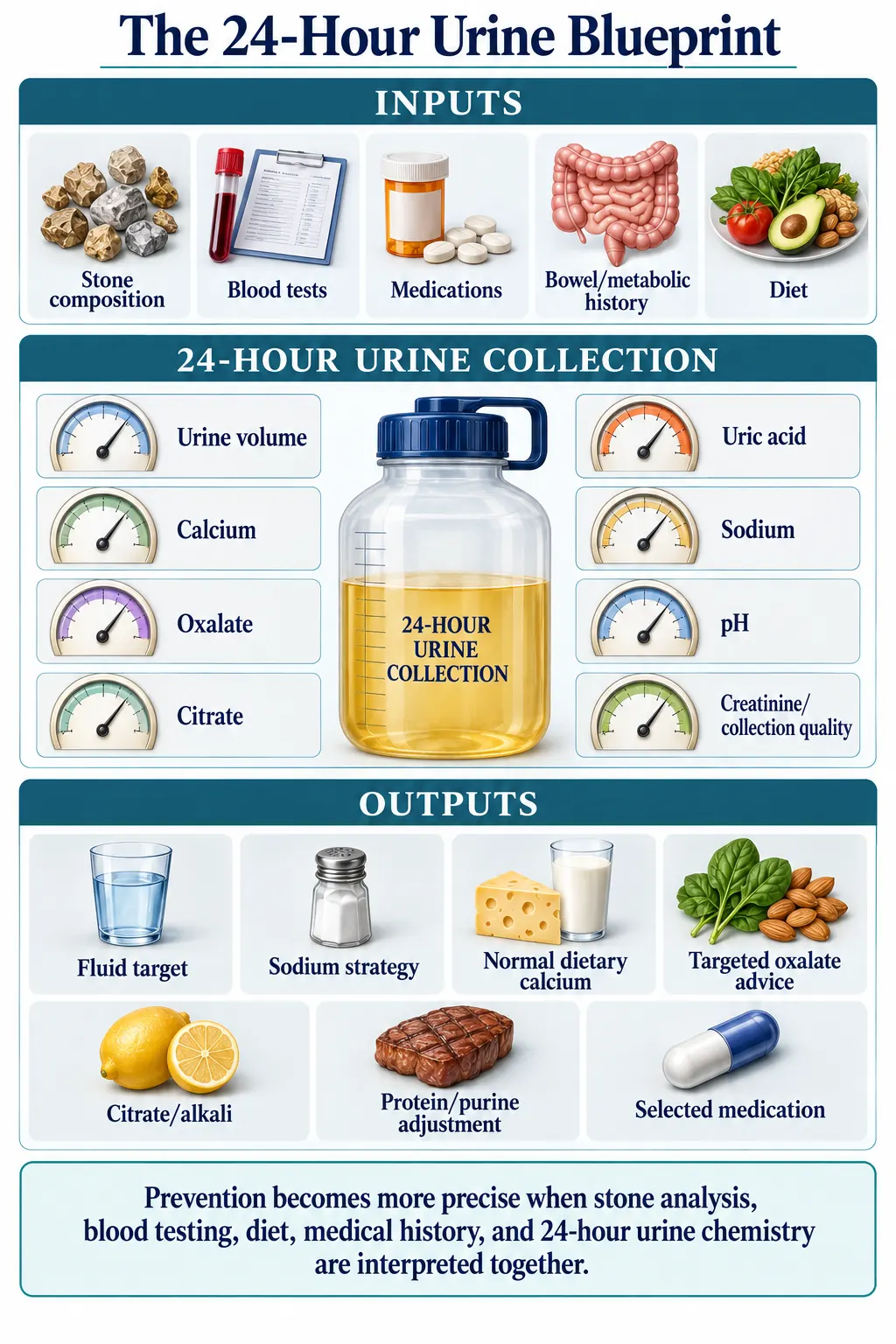
The blueprint: what goes in
- Stone analysis is valuable whenever material is available. Keep the stone if you can.
- Blood tests may reveal reduced kidney function, calcium disorders, uric-acid problems or other contributors.
- Your history of diet, medications, bowel conditions and metabolic disease adds context.
- A 24-hour urine collection measures urine volume, calcium, oxalate, citrate, uric acid, sodium and acidity, along with markers of collection quality. It is especially helpful for recurrent stones, high-risk first stones, a single kidney, unusual stone types or anyone who wants a targeted plan.
The collection has to represent real life
A 24-hour urine result is only as useful as the day you collect. A quiet Sunday at home may not represent a hot workday, a long commute, fasting, heavy exercise or the eating pattern that produced your previous stones. Choose a day that looks like the life that made the stone.
Completeness matters too. An incomplete day can give false reassurance. Collection quality can be judged, imperfectly, from the total volume, the creatinine level, the timing and whether every void was included. When a result is surprising, a careful urologist first questions the collection and its context before building a lifelong prescription around it. Repeating a study is not wasted effort if it prevents treating an artifact.
The blueprint: what comes out
The results translate into specific actions rather than a long list of rules.
- A fluid target designed to keep urine consistently dilute across workdays, exercise, heat and sleep, not simply a generic bottle count.
- A sodium strategy, because excess sodium can raise urinary calcium. Restaurant food, packaged food and sauces often matter most.
- Normal dietary calcium, taken with food, which often helps bind oxalate in the gut. Indiscriminate calcium restriction may be counterproductive.
- Targeted oxalate advice that finds your meaningful sources and pairs them with normal dietary calcium, instead of turning a long food list into fear or cutting out nutritious foods.
- Protein and purine adjustment when excess animal protein or a high uric-acid load fits your stone type and urine pattern; low fruit and vegetable intake, bowel disease and certain supplements may also matter.
- Selected medication, such as thiazide-type therapy, citrate or alkali, or uric-acid–lowering treatment, chosen for a defined abnormality or recurrence pattern.
Medication is not a substitute for measurement
Stone-prevention medications need monitoring, and they should not replace follow-up testing. Evidence on some options is mixed: the NOSTONE trial did not show a substantial reduction in its main recurrence outcome with hydrochlorothiazide compared with placebo in people with recurrent calcium stones, and some side effects were more common. That makes careful selection, an honest discussion of uncertainty and follow-up especially important. It does not show that every thiazide regimen is ineffective.
Make the plan specific enough to follow
“Drink more” becomes useful only when it is translated into urine output across seasons and routines. “Reduce sodium” needs attention to where your sodium actually comes from and why it matters for calcium. “Watch oxalate” should identify your real exposures. The same advice cannot work equally well for a low-volume calcium oxalate former, a uric-acid former with acidic urine and someone with infection-related stones. Stone prevention succeeds when the plan fits your real life closely enough to last beyond the first motivated month.
Close the loop
Prevention is a feedback loop: measure, intervene, remeasure and adjust. A repeat urine collection shows whether treatment changed the intended chemistry and whether a new problem has appeared. Without that second measurement, neither you nor your urologist can know whether the plan is working.
Questions to ask your urologist
- What type of stone did I form, and was it analyzed?
- Would a 24-hour urine collection change my prevention plan?
- Which blood or urine abnormality is my plan targeting?
- What is my urine-volume goal, and how should my calcium and sodium intake change?
- If you recommend medication, what is it meant to correct, and how will it be monitored?
- When will we repeat the measurements to see whether the plan worked?